Showing posts with label writing advice. Show all posts

Monday, April 11, 2011

The Cave: Where I Get My Writing Done


Hello readers and fellow Wicked Writers.

I apologize for my absences, I've been enjoying the A to Z Challenge over on my personal writing blog as well as feeling the joys of editing for a piece that is actually going to be published. :-)

Anyway, I'm back in the Wicked saddle with this week's topic: Best and worst places to write.

Well, I can only speak for myself on this one. I know every writer has there own personal zen spot that might drive the rest of us batty. For example, I know authors who swear up and down that music helps them write. While the right song can put me in my character's head or get me in the mood to work on my book, I cannot, under any circumstances, listen to music while I am physically writing or editing. It's just too distracting. I start singing along, then next thing you know, I'm dancing around the room in my underwear. So, no ... no music. Music bad. *Nods*

So, on that note, the best place for me to write is in my room ... which is were my computer is. Yes I have a TV in my room, but I can turn it off and KEEP it off. I can close the door and block everything else that might be going on in the house. My mom lovingly calls it "The Cave".

"I got a lot of editing to do today, Mom, so I'll be in The Cave."

Yup.

The only thing in my room that sometimes distracts me are my dogs who bark when they need to be let outside. Oh, of course there is the internet that is always a tempting distraction, but I can resist when I really need to buckle down and crunch.

I've never tried writing at a cafe before, either by myself or with a group. Many a author have sworn to me that writing at a cafe is bliss. While I LOVE coffee, I just cannot picture myself writing at a cafe. I imagine it would be like when I was a teenager and hand a "study" group at the library or at a friend's house -- yeah, it was fun, but never really got an studying done!

But I would like to try it sometime, just to mix things up a bit. I don't think it would be then worst place to write.

For me the worst place (or time) to write has always been while watching television. My brain turns off while I watch T.V. It's an automatic reaction or something.

I'm sure there are worse places to write though. Like out side in the rain ... your paper would get soggy and the ink would run. That would be a bad predicament.

Readers, where's your best and worst places for writing?

Friday, April 1, 2011

What's This Rules Business?

This week, the Wicked Writer’s were prompted with the following: “How do you find the balance between following the rules, but still being unique to your chosen genre?” By the very nature of the question, I suppose we need to first set the table, as it were. One: There are rules to be followed. Two: The writer must be unique to their genre or their work will not be noticed.


Rules: So just what are these rules to be followed? To tell you the truth, I wasn't entirely sure, myself, although I did seem to feel, in the back of my mind, that I had a sense of what they were. So, I did what any enterprising individual would do in my position: I Googled 'em!


A post that I found for the Horror Genre writer explained how horror writers needed to capitalize on the emotion of the readers, using their own phobias and fears against them. It seemed to indicate that rather than focus on plot, the writer would build the sense of dread and then sustain the suspense until the climax of the tale. I don't know whether I agree with the focusing less on plot than the whole dread-thing - and perhaps I miss-read their position - but, as I suspected, I knew this already. At least I did on a subconscious level. Perhaps this is why we writers need to be reading as much as we can in our genre, because having read thrillers and horror novels most of my life, my creative mind already understood things such as pacing, foreshadowing, etc., without me actually realizing that I might one day need to explain it.


Being Unique: The underlying point here in point two seems to indicate that if one’s writing is not fresh and new it might be relegated to the slush pile and not be noticed. When I realized that what I was writing was a vampire book, I then had to figure out, in a world where every other film, book, and television show had vampires in it, how mine was going to survive and be noticed. Whether it has or hasn’t, I’m hoping that it is still too early to say; however, I did go for a crossover angle. My vampires live in a world where good versus evil is clearly established, and that line of demarcation is challenged and investigated.


My World: My crossover Christian vampire novel is good. That’s not me bragging. Is it the great American novel? No. Will I one day pen an earthshaking novel that breaks new ground and moves mountains? I hope so. I’m certainly hoping to improve and endeavoring to go beyond myself. What I mean by that is many readers have sought me out to inform me that not only did they enjoy the book, but they thought it was something special to them. Once again, they sought me out to tell me that. In a world where it is very easy to begin doubting one’s self, I need to cling to this truth and never give doubt a chance to seed.


The problem that I am having, along with every other writer, and perhaps some of you, is getting the work noticed. I have a pretty good presence on the Internet, I have given many copies away and have had them positively reviewed, and I have a presence in my hometown (where the novel takes place); however, it was not the big hit that I thought it might be. Being a baseball guy, it wasn’t as if I thought it might be a home run in my first at bat, but I was hoping for a solid double down the left field corner.


It may yet be that hit, but I might have to foul off a few more pitches until I get that pitch that I can handle. What would you folks write about this subject were it your assignment this week? Do you have any thoughts? What do you know of the rules of your preferred genre? I’d love to read them.

Friday, March 18, 2011

Notes? What notes?

This week, the Wicked Writers team was given the task of posting on how we go about keeping our novels, notes and ideas organized. Sadly, mine is not the greatest of examples. It is more of “do as I say and not as I do” kind of thing. I learned that from dear old dad, by the way. When he wanted me off of his grass, I was told that it was his grass. When he wanted me to mow the grass, I would hear, “You need to mow the yard, son. It’s your yard too, you know”. While he was teaching me how to drive, that thinking moved to the use of the radio. “Leave the radio alone,” he would say. “It’s distracting.” When he was driving, it suddenly became, “Leave the radio alone. The radio is for the driver.”

With that in mind, please continue reading this post, but treat what is written here as if it were one of those infamous “don’t let this happen to you” Army films.

As many of you may know, it took me twenty years to write the first novel. I went through all sorts of maturation, one aspect of which was learning as I went the importance of note-taking as well as the importance of the organization of said notes. Did I take any notes during this time? Absolutely. I just couldn’t begin to recap all of that after so many years and so many changes.

I wrote two drafts of the second novel in only eight months. I can explain the note taking on that one because it happened so quickly. There was a lot less time to get it wrong. On the other hand, the only type of things that I needed help keeping track of were character traits such as what color eyes someone had or their personality quirks. Since much of my writing is simply allowing the images to appear inside my head – with me only having to write them down -, I have simply had the blessing of not needing to jot down that many notes.

See, I told you. Not the best role model, am I?


I am still a work in progress, however. I suppose that this is true for all of us. Even the established greats would probably admit this. In my case, I have only written two large works. With each one I showed remarkable growth. I moved from not giving outlining too much thought to suddenly penciling down each chapter, blow by blow. Although I marvel at those who have binders and shelves full of notes, outlines and the like, perhaps I may one day find myself there as well. I just don’t know.

Sometime this year I will begin work on the third novel in my vampire series. It is currently little more than a typed three page outline at this point, with the rest of what I foresee simply gestating inside my mind. Perhaps sometime later this year or early next I can begin revealing how much further I have matured.

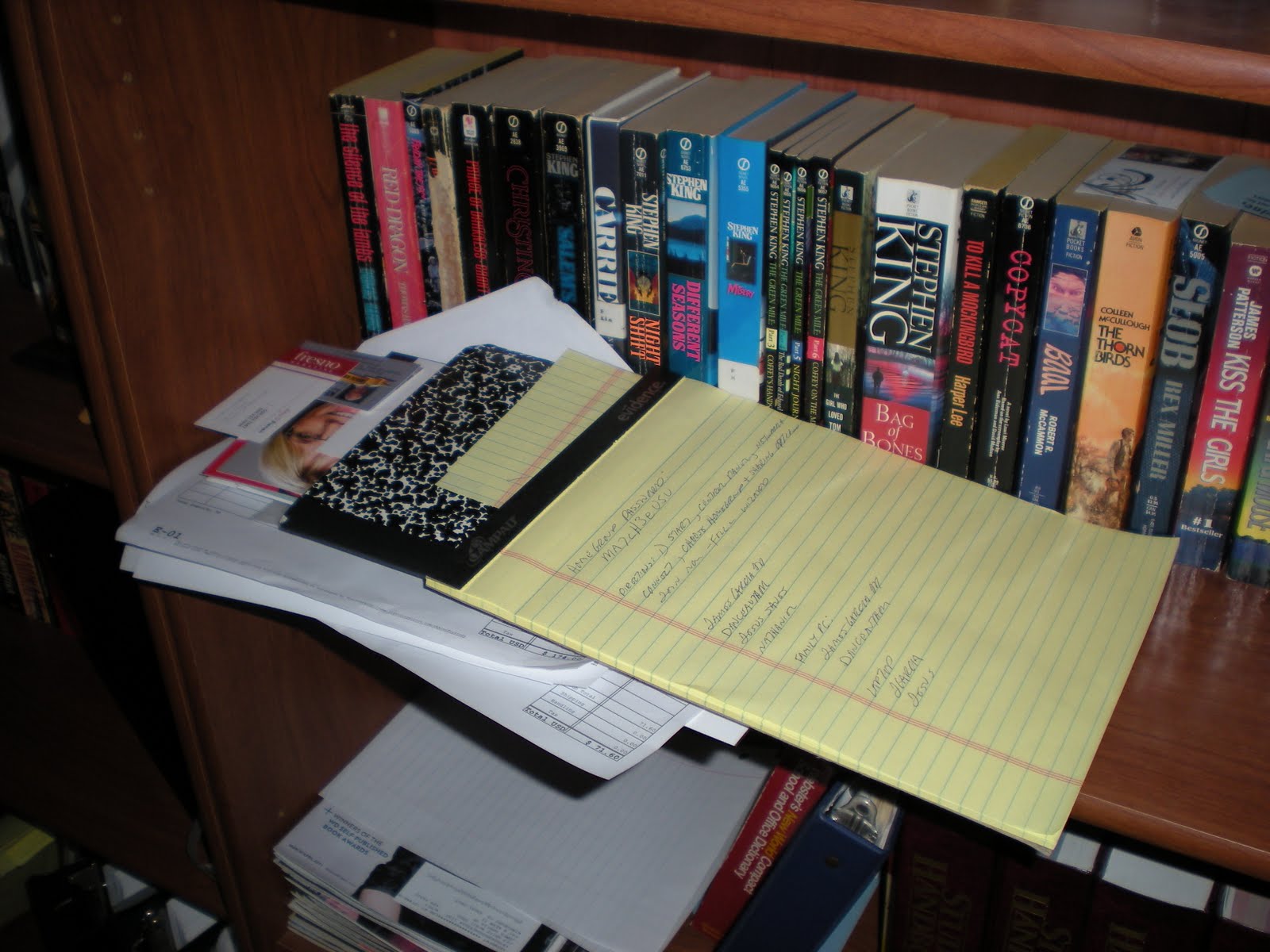
Since I am in such poor shape and in desperate need of counseling, please enlighten me: How do you folks manage your writing projects? What are the big mistakes that writers make that you might be able to shed some light on? What have you learned from personal experience? I’d love to hear. Perhaps the next pupil that you will correct is me. As you can see from the photos, my notes are piled up on a shelf in my library. Heck! I don't even have a desk.

Tuesday, March 1, 2011

Motivation from the Dark


Sorry this post is a little late. It was hard for me to write as you will see as you read this post. This weeks topic is about motivation. As a warning, this post is going to get really dark for a moment, which might seem out of character for me as I usually try to stay positive in my posts, but it'll get better toward the end I promise.


So what motivates me to keep writing and not give up? Well, to answer that I have to take you back a few years to a sixteen year old girl trapped by alcohol and drug addiction. I couldn't function without a few vicodins or oxycodones to start the day, a few drinks after school (okay a lot of drinks) and more pills at night. The fact that I didn't stop my heart with this combination of chemicals is beyond me.

I should have died.

I wanted to die.


Yes, it's true. I wanted to die more than anything. I would wake up extremely mad I woke up at all. I tried to years to find the right concoction of drugs that would let me just slip away in my sleep. But I never found it.

I guess maybe I have a purpose to fulfill in this life. Perhaps I am destined for something. Who knows. All I know is that for about ten years, my soul was in total agony because of what I was doing to myself and the fact that I seemed immortal!

I don't want to scare you too much with the horror stories of those ten years. But let me just say I can tell you each moment where rightfully and scientifically I should have died. Besides the lethal drugs I was pumping steadily into my system, there was the fact I ran into traffic - on purpose. I purposefully walked into dangerous situations and fights hoping I would come out the loser (and in my mind, really, the winner...) I have more scars than I can count - one of which from a somewhat serious stab wound to my chest. The rest from doing things like, rock climbing with no safety equipment.

Obviously this story has a happy ending. I didn't die and I don't want to die anymore. I got into a recovery program, AA, and slowly began to put back the pieces of my life. It's been four and a half years since my last drink - four and half years since I last wanted to die.

So what motivates me to keep going and not quit? The fact that every day I have now is a miracle. Sometimes I feel I didn't earn this time because of the person I once was. I hurt people during those ten years I suffered - I hurt a lot of people. Each day is a blessing that I can't take for granted. I wasted ten years of my life because of my own selfishness and pain and I don't intend to waste another moment. I keep improving and learning and moving forward in a positive way.

I should have died long before I reached the age of 20. The first birthday I had after I sobered up I cried for most of the day. I never thought I would see the age of 23.

Like I said. I must have a destiny to fulfill. I have been blessed with friends who truly love and care about me, a husband who has stuck by my side for the last four and a half years, a beautiful son who adores me.

If I was to impart any knowledge to the readers out there it would be this. Don't waste your life. If you have dreams or things you want to do -- go do them NOW. Life is way too short to wait for "someday." And it's way too short to quit when things get tough.

I'll close with one of my favorite quotes:


"Love like you've never been hurt,

Dance like no one is watching,

Sing like no one is listening,

Work like you don't need money,

and Live like there's no tomorrow."

Tuesday, February 1, 2011

Knowing is Half the Battle

This weeks topic is a great one for writers, I think. Do I write what I know or what I feel? Like JD, my answer is a YES on both counts.

There is a famous quote that says "To write well, write what you know." That is very true but only half of the equation. Knowledge is important to make your characters, plot, setting, etc believable in a story.

But you ask "Anastasia, as a fantasy writer, what do you need to know? You can just make everything up right?" WRONG! Writing fantasy requires just as much research, if not more in my opinion. And sometimes it might seem like the research I do has nothing to do with my story, but it does. I do a lot of research on government styles, cultures, traditions, etc. - all of them. Why? So that when I do go to "make everything up" I can present a believable world to the readers. Sometimes I even base my fantasy worlds on traditions and themes in our own. So I need to know about them before I can bend or break the rules for my new world.

But that's only half of the equation!

If you don't FEEl what you're writing - connected to it, love it, enjoy it - you're readers won't either. So while I know a lot about the Medieval Ages (technology, traditions, etc) if I didn't ENJOY or LOVE the time period, it would show in my stories. Or when writing my sci-fi, I think one has to LOVE space or technology and adventure to pull off a great sci-fi story. (Then again, that might be me.)

Regardless of the specifics of whatever genre you write, you have to love it. Feel it. I enjoy reading mysteries and crime novels but I don't think I could ever write one. I love to read them sure, but I don't love the minute details of the trade enough to write what I feel. The story would lack in my opinion. Sure, someday that might change, but right now, I'll stick with what I know I love - fantasy and sci-fi adventures.

So do you write what you know or what you feel? I say both are needed to create the best stories. Don't stress about the small details too much as you're writing people! That's what editors are for! Focus on your love for adventure and the seeming useless knowledge bouncing around in your head. My favorite quote is "I'm not dumb, I just know completely useless information" Well guess what? As a writer, none of that information is useless! Put it into a story! I promise if you put knowledge and feelings together, it makes for a great story - and you can always edit your grammar later!

Tuesday, November 23, 2010

Sell Yourself the Right Way

Since it is open topic this week, I wanted to talk about author brands. It has become a sort of obsession of mine as of late as I try to update my website, blog, and other sites to reflect my 'brand'.

Now, what is an author brand you ask? Well, to me it is the image that you present to your readers, agents, and fellow writers about who you are as a writer. Key point there. Now myself personally, I would rather have my website full of skulls and barbed wire. However, that doesn't really show my author brand as a fantasy writer does it?

So, part of creating your own author brand is to really think about what you write. What genre or what type of feelings do your stories present? If you write in multiple genres, how could you show the feel of all the genres at the same time?

This part can be a little difficult, especially if you write multiple genres under the same name. However, many people recoomend, and I agree, that if you write multiple genres, you should have a different pen name for each genre. For me that also means having a website for each name, each with the right theme.

Too much work you say? Well, think of it like this. I write High Fantasy right? My website reflects this with a marvelous fantasy theme to it. But I do have some ideas for sci-fi stories. Now, my High Fantasy readers and fans will know that my name on a book means High Fantasy. But if they pick it up and find out it's sci-fi they will be a bit dissapointed and probably feel a little misled. Sure, many fans read multiple genres. But, if they expect a certain thing from you and you change it on them, they still might feel a little jilted about it. So, consider your fans and your reader base when writing in multiple genres - and thus choosing an image or feel for your site and/or blog.

Pen names are important to a writer's brand also. My real name as you know is Anastasia V. Pergakis. I went by the pen name Harley D. Palmer for years! But, when I really became serious about getting published, I had to sit down and think what name to use. A friend of mine told me that my real name would look awesome on a fantasy cover and I agreed. So, began the process to change everything in  "Harley's" name to "Anastasia". Will I ever use Harley again? Of course! I plan to use it later when I start to write in genres other than high fantasy. At that time, I will create another brand name and slogan to go with those stories.

And that is point here people. Create an image, a feel, and a name that all goes together. Put out there a "slogan" of a sort that people will remember and recognize. It's all about getting people to remember you and find you when they want. If they put your name into a google search, they should find YOU (the way you are on the cover of your book) all over the place. Website, blog, twitter, facebook, whatever.

For my blog, I went with a theme and layout that fit with me as a person rather than my writings. This is because that blog will be used as a central point for every thing I do under any name. So, I chose a theme that will cover all topics I ever decide to talk about. Some might tell me that my blog should match my website, or match the "fantasy" brand. However, since on my blog I talk about more than just my fantasy works, I don't think including the blog into my 'image' would fit very well. Others might feel differently and wouldn't do this the way I did. That's fine too. The main point here is to create your brand however you see fit - but just do it.

So I challenge you to sit down and really think about your 'brand' if you haven't already. Think about the future and where you want to be and how you want people to see and remember you.

Thursday, November 4, 2010

Research: the write stuff – a tale of big words?

OK, a free blog topic! So, is it really true? I really don’t have to write more about horror, Halloween, and other ghouly stuff? (At least not for another year!)

But I have gotten so used to this place… writing about stuff I haven’t really a clue about! What am I to do now? Go back to mundane thrillers and financial crime? And, me being so late with this post… What will you readers be looking for now?
If in doubt… write from experience! Write what you know and can feel!

Yes, all well and good, I say… but there is an existential paradox here (big words #1 & #2) Oooo! I love it when I get philosophical! (Big word #3) Again I digress…

The Existential Paradox of Fiction


[caption id="attachment_3794" align="alignright" width="144" caption="A paradox..."][/caption]

Write what you know and can feel? But I write fiction. Fiction is not real. I cannot KNOW it; neither can I actually FEEL it! I cannot therefore write fiction based on what I know and feel. I cannot write what I cannot know. QED!

Existentially, if in doubt… what the h*** do I do now? How can I effectively write fiction if writing is best based on knowledge and experience and I have neither?

Research, I hear you say. (Well I might, if I could get the hang of this auto-suggestion malarkey!)

Research is a search for knowledge – perhaps the knowledge I need to write the fiction I am planning. But research implies a systematic investigation to establish facts and it usually also implies a scientific (not existential) method. What good is research to me? I am trying to write about stuff that does not exist – it is FICTION!
I repeat: F I C T I O N ! ! !

What about applied research, though? Surely that is different?

Oh, yes! Discovery and interpretation – all designed to advance human knowledge. But, knowledge as the basis of the unreal – of fiction? The paradox again. There are no facts concerning what is not real.

Now here’s one! Artistic research… Debatable! Art as an alternative in the search for knowledge and truth? Dubious, surely… but we are still digressing from the paradox! There are no facts concerning what is not real.

The existential paradox suggests: “why should we bother to develop our individual knowledge-bases as an aid to writing fiction – developing untrue narratives for the purpose of entertainment, not the advancement of human knowledge – why?
Why bother with research? We can just make stuff up, surely!

[caption id="attachment_3791" align="alignright" width="114" caption="A tricky place..."][/caption]

Case in point! A short time ago, I posted the opening chapter of my work in progress – the sequel to River of Judgement – in which I set the villain of the peace in a tricky situation in Libya. What do I know of Libya, or what an encounter with a criminal master-mind would be like? I know nothing. It’s fiction. I just made it up!

I created a social situation in a country that I have never visited, in a world (of crime) that I have never witnessed, about people that are wholly fictitious! If I was to gather facts – research, if you like – to develop the knowledge to write that scene on the basis of what I knew to be the case, I could end up in a pretty dicey situation myself. That is, assuming that such a reality actually existed somewhere, and didn’t mind being exposed in a real narrative. But then, that would not be fiction… ;)

I have missed a point here (deliberately so, in the hope that I could find enough to write about, lol)
The paradox of the unreal real is simply solved.

The answer lies in counterfactual analysis (big word #4). Assume the fiction is real, as we write about it. We research for facts that would support our fictional reality (if it was real). We research to support the narrative, not to provide it.

We want our readers to believe in the worlds we create. But the great thing is, these worlds we create don’t actually have to BE real. The world of our fictional narrative merely has to give the impression of a reality, long enough to engage our readers.

Fictional worlds, the places and characters that exist within them and the lives and actions we portray as fiction writers, form what can be described as socio-cultural contexts of systems of meaning, action, and/or beliefs.

These contexts of systems are basic to the world they describe. They are “plausibility structures”, and are a dialectic (given up counting big words now). Our fictional world should comprise a plausible structure, one that supports the fictional narrative. It does not replace it. And the fictional narrative, drawing on the plausible structure, in turn, suggests that structure is wholly real! The narrative acts to make the fictional world self-evident.

So research becomes a necessity if we do not have the knowledge to create and write about plausible structures.

And where does that leave the opening of my sequel set in Libya? Is my reality plausible? (Not factual.) Well, lucky me, this weekend I am about to set foot on Libyan soil for the first time in my life. I shall take full advantage of gaining experiences that will help me develop the structure of my fictional world – but I shall not worry a jot about the narrative! :)

Thursday, September 30, 2010

Pushing the Envelope

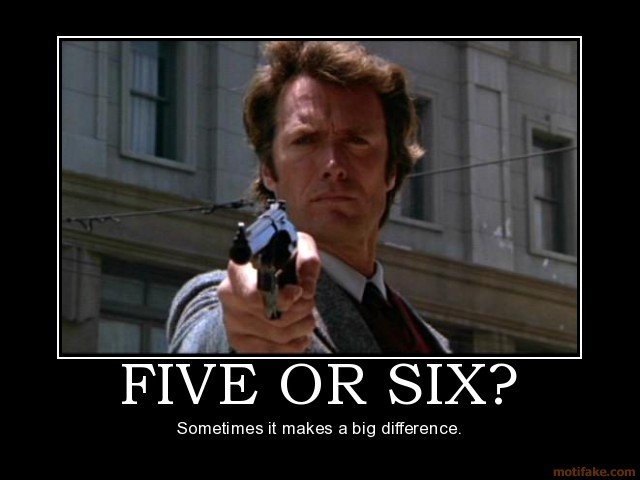
[caption id="attachment_3550" align="alignleft" width="300" caption="Dirty Harry and his loaded question."][/caption]This week’s prompt is: Pushing the Envelope. Therefore, the first question one must ask is: "Do I feel lucky?" Okay, that's really a bit of dialogue from the classic motion picture, Dirty Harry, but a very good point which we will get to. I mean, really, what does that mean, pushing the envelope? What envelope?

For me it means just the opposite of what I have been doing since this amazing turn of events began last year when I found that publisher. With regards to my writing, I haven’t been pushing anything, other than myself to do so much more. Yet, we're not discussing working hard, meeting impossible deadlines or making our presence felt to the masses. I believe that "pushing the envelope" refers to pushing past one's comfort zone. To move beyond self constructed barriers. To do what is not comfortable.

I am not a marketing guy, but I think I have been bright enough to know not to alienate potential buyers of my novel. Therefore, I have not mentioned in any short story, novel, post or article which side of the political fence I may or may not reside. I have stayed away from any and all incendiary topics. Not only this, but I have also attempted to shy away from small things which could also get feathers ruffled, such as what form of music I have little appreciation for, or which sports teams I follow. Some of these things probably sound rather trivial to some, and most certainly, some of these things will eventually be made known (Country Music; Dallas Cowboys and Chicago Cubs). My point is that in the beginning I wanted to try to be able to reach every facet of my potential audience.

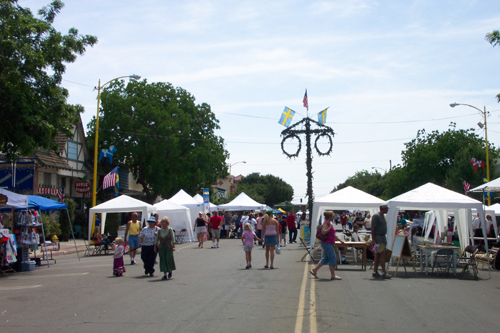
[caption id="attachment_3551" align="aligncenter" width="300" caption="Draper Street, Swedish Festival"][/caption]One example that I can give is The Kingsburg Swedish Festival. The city that I live in has Swedish roots. Therefore, our colors are Swedish; our buildings have a Swedish architecture; for all intents and purposes, we are a Swedish town. Once a year in May, we hold a festival which draws thousands. Years ago, the festival used to be held in our large park. Before and after our Saturday parade, people would head back to the park where the vendors and food booths were located. We had shade and comfortable grass to walk upon. Eventually, it was moved downtown to what we call our main street. Now we have to walk on cement and asphalt, and have little shade from the sun; but the consumers can walk amongst the shops and thus boost the downtown. Recently, there was a Facebook movement began which hoped to move the festival back to the park. However, since I am now a member of the Chamber of Commerce, you must now see that I declined the invitation to side with one side or the other. I think any reasonable person who has attended the festival would probably know which choice is best, but I am staying away from the subject.


Now, having said all of that, is this really what we mean? Or is it something more?

There is another way that one could push the envelope. My novel is a Christian/Horror crossover. It has a little bit of both and, I hope, is just the right combination to make the novel interesting, fresh and gripping. Now that it has been out for seven months, and I have begun to grow a small following across social networking sites as well as in my hometown, and the audience has begun to know what to expect from me, could it be time to push against their comfort zone? Do I now release a dark and pure horror novel where the devil seems to win more than he loses? Or do I release a purely Christian novel? How about Romance? I could do that, you know. I reach for the romantic comedy DVDs quicker than my wife does. Don’t think I couldn’t! Perhaps I could really shake things up by writing about the rape and murder a young girl much like The Lovely Bones.

What do you guys think? When might it be time to do such a thing? Too early and one might lose an audience before they have that trust factor where they’ll follow you anywhere; too late and they might feel abandoned. I was going to cite Stephen King, but because his writing is so prolific and his audience so varied that he probably did not notice the couple of times that I quit reading him. Of course, he knows that we sometimes come back.

[caption id="attachment_3552" align="alignleft" width="212" caption="See! I told you."][/caption]

Thursday, September 16, 2010

Outlining: A Personal Journey

[caption id="attachment_3437" align="alignleft" width="300" caption="Taken last winter with 100 other potential author photos. The beard did not last the spring."][/caption]

      To outline or not to outline; that is the question. At least that is one burning question this week at Wicked Writers, where we endeavor to discuss, convince or even lecture on the necessity of plotting one’s course when beginning that next bestseller. Some might suggest that it is in fact the most important writing one will ever do.

     As I contemplated this week's prompt, I was unsure just which side of the fence I was standing behind. I have written by simply sitting down and blazing ahead, come Hell or high water. More recently, I have written with more of a plan. It wasn't until I had written this post's rough draft that I came to fully realize just which side of the fence I should be standing behind. Walk with me, won't you...

     I might be a special case and I will leave that for you to decide just how special needs that might be. What I mean by this is, I have done quite a lot of writing where I have started madly typing away, allowing the visuals in my head to play out as if they were the scenes in a motion picture that had yet to be written down. A script in reverse, if you will. Regular readers of mine will recall that I have mentioned this before. In fact, my first novel was written just this way. It did take twenty years to write, so it would be extremely difficult for me to champion this method of writing. It took much editing and many rewrites to get it where it is now, and may be one of the reasons why it took so long. Perhaps if I would have mapped it out with an outline it might not have taken so long to complete. I have also written all of my short stories in this fashion, but the size and scope was so much easier to rein in, if and when things began to go astray.

     For my second novel I did map it out. I don’t know whether it was the greatest outline in the world since I had never tried writing a novel with one before. I think it did help me to map out the action beforehand and to narrow my focus. That novel only took eight months to write from beginning to end of second draft. My third novel in the series currently only exists as an outline. Yet, even now, as I contemplate working on that project this winter, I can hear the outline speaking to me. I grow excited just thinking about it, most likely since I don't have to do the heavy lifting now. I am confident that once I blow the dust off of that thing, the images will begin to play and the writing will be quite easy. Whether it is good or not remains to be seen!

     You will be visited by three ghosts... Okay, perhaps just one.

     Come just a little further please...

     I recall a painful writing experience that occurred in my youth. Today, not only does every home have a computer, but there is one in every other room. However, what you are about to see occurred back in the 1980's when there were only one or two computers on every block. You know, the dark ages! Anyway, my neighbors allowed me access to their pc for my writing. I spent many an afternoon there, but one particular evening I must have been late getting home and neglected to save my work. I recall leaving their home, feeling horrible as I walked back across the street. That night I spent hours jumping out of my bed as bits of action, dialogue, etc., came flooding back as I was attempting to go to sleep. Eventually, I got enough of it back, or at least enough to save the story. If I would have had an outline, it might have saved me from a lot of stress, unless of course I had neglected to save that, too.

     As you have taken this journey with me, you must realize, as I have, just how important outlines can be.  Mine are not great sketches of character or the latitude and longitude of every single subplot. They are only a few sentences that essentially script out where I need to be with each chapter. They still allow me the freedom to create, unshackled to strict rules, while helping me to focus on what should to be happening next. Perhaps more importantly than anything for me has been how helpful they have been with my pacing. Studying my outlines I have come to realize just what was needed and exactly when it was needed, much like a film director planning his shots by storyboard.

     If one would have asked me how much stock I put into outlining prior to this week, I might have said that I was not a believer. However, as you and I have found as we walked the terrain of this subject, I believe that I can be firmly counted among the converted. How about you? Are you reluctant to sit down and outline for fear that it zaps the creative process? Is it far too mundane a task? Are some of you other Wicked Writers out there believers in simply sketching your writing, and thus leaving plenty of opportunity for creativity or spontaneity? Do some of you actually prefer the shackles? (Poor attempt to entice comments?)

     The Wicked Writers Staff thank you for all of your comments this week and every week, and hope that you will keep them coming. We are reclining about Headquarters, snacking on Maple Bars and sipping coffee, eagerly awaiting more. Or is it just me?

     Oh, and thanks for taking the walk with me...

Thursday, September 2, 2010

Size Matters & four other needs

This week the prompt at Wicked Writers was: Five things that we would like to see in the genre that we write in. Since my debut novel is a Christian/Horror crossover, and aimed more for a PG-13 type of rating, I am commenting today somewhere between thrillers and horror. And no, this is not C.J.’s post, I was simply looking for something sensational to entitle the thing with. If you were looking for something else, you might try Everything Erotic on Kindle. Shameless plug for C.J., I know (smiles).

Before I begin, please allow me to fill you in on what it is that I like.

[caption id="attachment_3337" align="alignright" width="196" caption="The novel"][/caption]One of the first novels that I ever read was The Amityville Horror, by Jay Anson. I am not here today to debate with you whether or not George and Kathleen Lutz concocted their story. I will leave that to others. There are plenty of sites on the web devoted to which side of the fence one might reside on with regards to this subject. If nothing else, it is simply one of the scariest “haunted house” stories that you will ever read. And you must read it at night, alone, while the rest of your household is quiet, if you want the best effect.

I think I like haunted house stories or ghost stories, if you will, due to the fact that it is something that every one of us can relate to. We all live in buildings that make noises in the middle of the night, and at some point or another every one of us have been alone in one…in the dark.

Serial killer stories are another of my favorites. Of course I refer to the fictionalized versions! I don't like it at all when it is real and being reported in the newspaper or on the evening news. What I love is the intrigue, the criminology work that must be done and the chase as the authorities close in. On the other hand, part of the reason that we can believe these stories, unfortunately, is due to the fact that these killers really are in the news every year.

Now that I have explained a bit of the “what”, I would like to explain the “why”. What I enjoy is the sitting on the edge of my seat kind of stories. I am not interested in crazed lunatics with chain saws, running around tirelessly, hacking up everyone that they can find into indescribable pieces. Nor am I interested in Saw XXIII or whatever number the filmmakers are on. I want to be thrilled by dark material, but not shocked, revolted or disgusted by torture porn and the like.

Having said all of that, the following are five things that I would like to see different. I will weave between print and film to help better illustrate some of the points.

1)  Something new. Since much has been done before, it simply makes it that much more challenging to come up with new ideas or fresh twists. M. Night Shyamalan hit the first pitch that he ever saw for a grand slam with The Sixth Sense. Unfortunately, he has only managed a few weak singles and a double since then, but I like him, so I wish him well. The thing was that his idea was totally fresh, and it invigorated the genre. Of course, we then saw a lot of folks simply coming up with a great reveal for the end of their film or book, with little but a weak story to get us there, as if we cared by then.

[caption id="attachment_3338" align="alignleft" width="160" caption="A scene from The Sixth Sense"][/caption]

2)  Stop showing us. When I was in high school I once heard that a poll conducted with prisoners revealed that they would much rather have a Sears catalogue then a playboy magazine. Less was actually more. I thought the notion ridiculous at the time, but I was a teenager who could only think about women, so what did I know? One of the reasons why the film, Jaws was so successful was apparently by accident. The mechanical shark, Bruce, named after Mr. Spielberg’s then-lawyer, did not work often enough, so they did the best that they could under the circumstances and it ended up making everyone involved look brilliant. The reason why the original Friday the 13th part 1 & 2 were good was due to the fact that the audience was rarely given any glimpse of either Mrs. Voorhees or eventually her son, Jason. In these cases, what we received mostly was the expectation of the killer. My good friend, Carole Gill, who recently blogged here made a very good point of this on her own blog. You should look her up if you have yet to do so. We're hoping to enlist her talents here soon on a more permanent basis. She's the real horror writer.

[caption id="attachment_3339" align="alignright" width="160" caption="Where's that bigger boat?"][/caption]

3)  About Length. I know, I know; stop it already. The point here would be that the most important aspect is for the author to tell their story. I would hope that market concerns would not be the driving factor. Stephen King’s The Stand was far too long for a newer author, so the publisher had him trim it down. It was very good; however, when his name became so much bigger than any of theirs’, he was allowed to put back all of the pages that he had trimmed. What is key is that each chapter, every paragraph, and ultimately even the shortest of sentences be necessary. If it takes longer to give the reader the proper back-story, then make it longer. If it’s too short, don’t give us filler simply to stretch it out. The story is what it is. Thankfully, Mr. Jackson gave us additional footage for the dvds because there were times in all three Lord of the Rings films, and especially in Return of the King where I felt rushed through the original theatrical release. I recall Clive Barker’s Nightbreed making me feel that way, too.

4)   Unnecessary murder. Why does each of Dirty Harry’s partners end up dead or physically incapacitated? I would have thought that once would have been enough. I have killed off a few characters in my writing, but am conscious of the fact that others feel the same about this subject. Let’s not erase someone simply because they are in the way, or in order to give the lead character the motivation necessary to kill every deviant that comes there way, ala Charles Bronson in Deathwish. What about this 70's idea that every sex-starved teenager should die, leaving only one left to survive. Did those screenwriters think  that it made it a fairer fight? My 16 year old and I were watching Predator recently. Thankfully, the woman survived and was helicoptered out of the forest with Arnold the Governator, otherwise it’s not a great story any more as it is a star turn for the leading man. How about killing off the lead somewhere near the end of the movie? How’s that for original? I know it’s been done before, but so infrequently that only John Wayne in Sands of Iwo Jima comes to mind or Tom Hanks in Saving Private Ryan.

[caption id="attachment_3340" align="alignright" width="106" caption=""I 'ain't got time to bleed!""][/caption]

5)  Too many twists. I love twists and turns and surprise endings that you never saw coming, just as much as the next person; however, not all at the same time. In The Dark Knight, although a very good film, I doubted that Batman would actually ever catch Heath Ledger's masterful Joker, when he had made him look so pathetic for the entire film. I thought Dan Brown's Angels and Demons was a terrific book until three-quarters of the way through when it took one twist too many for my believability.

Perhaps I am being too picky, making much ado about nothing. Perhaps not.

What do you say? I'd love to hear what you think. Did I miss anything? Did I go too far?

What about the rest of the panel for this week? We would love to hear your comments. If nothing else, have a great long weekend. Just not here...

[caption id="attachment_3341" align="aligncenter" width="220" caption="112 Ocean Avenue, Amityville, Long Island "][/caption]

Wednesday, August 25, 2010

Let the fruit throwing begin!

A great title... it bears so little resemblence to my post this week, but it is a colourful idea... (thanks C.J.) Watermellon is big here in Greece and it is such a bright colour!


Well, what would the alternative have been?

A more mundane "FIVE THINGS" I suspect! Anyway, I shall continue!


I can announce that Greece does have the internet... but, after 10 days of burning my fingers out on the keyboard of my laptop, working on the sequel to River of Judgement, I have not been checking my emails as diligently as I should (it is also supposed to be a family holiday!) Quelle suprise! When I came on line this evening, to post the blog I had written poolside this morning, after checking the schedule at the weekend, I had to do a double take! But it is too late now to find a new horse, let alone write a new post, so here goes...

FIVE THINGS (no, not five items of fruit, C.J.!)

Expresso, chilled water, ouzo, good wine and good food…

And...

Company of course, to share all the above!

[caption id="attachment_3284" align="alignright" width="224" caption="Such a hard life, writing!"][/caption]

But, as I sit here at the poolside bar in the Eagles Palace Hotel on the Athos peninsular in Greece, on what is the last full day of my summer holiday, I believe I may have that angle covered!

“Five things” the program said… (momentarily in Greece, anyway :) ), more specifically list five things I would wish to see more of, in the genre I write in. I do so love these challenges!

I think I might have mentioned, in a previous post, how I am not a good reader (I read very little, for a writer) and how I tend not to stick to a genre label. I am writing a story about a number of characters in a certain situation. It just so happens that the situation – and its consequences – gives rise to some fundamental characteristics. These characteristics may be shared by others stories and, low and behold, a collection of stories that share enough such characteristics becomes labelled a genre.

My own view is that we are conditioned too much by the process of publishing that, for marketing considerations, is driven by the requirement to segment audiences. Publishing is just like any other industry. It has to follow rules of supply and demand. Market research and segmentation is just another facet of commercialisation that removes the need for people to really think about things! OK… So, we live in the real world, I concede this fact… but where is the art in that?

(As an aside, I feel I may be digressing a little here. Perhaps it is the effect of all the ouzo I have drunk in the last ten days? But, no excuses, I shall return to the focus shortly!)

[caption id="attachment_3283" align="alignright" width="224" caption="Which one, Dad?"][/caption]

I asked my young son, Finlay, what he enjoys in the stories he reads… he likes mysteries, and action adventures. He is nine (going on 59) and his reading age is such that the books he has started to read contain profanity, which we have been telling him is wrong! But that is another issue… (Had this post been about five things I would like to see less of in the genre I write in, then I could happily expand this point!)

Finlay’s wish is to see more series. He likes to get to know his characters, and this makes him want to read his books faster so he can find out what the hero is up to in the next one! Maybe this is genetic. His mother (she declined to appear in a photo) gave a similar response when I asked her what she likes in stories – and she reads across multiple genres. Although the series angle was played down, the idea of getting to know the character was certainly important.

Where does that leave me? I used to read, and read a lot. I, too, loved series. (There you go! It is genetic!) Westerns, Sci-fi, James Bond. I loved complicated multi-faceted plot lines. Could I possibly cast my mind back and come up with areas that influence my own writing. Well, for the purposes of brevity, and avoiding further procrastination and digression, here goes, in no particular order of importance…

1) More life in some of the characters.  I am not quite talking of writing that brings characters to life here, though that is also important. (As I said, I would prefer the “less of” rather “more of” approach.) How about more life as in less death? OK, so I am crossing borders between crime, thrillers and such, but, really, do we need quite so many deaths to make a good story? High body counts to me smacks a little of sensationalisation.

2) More mundane events. Mundane? Yes, but I thought thrillers and suspense and crime are all supposed to be the antithesis of the mundane. True, but, again, the less is more approach. Why do the high body counts in many “in-genre” thrillers and crime novels also feature such horrific, mutilations of the victims? Do they all die such horrible deaths? Is every criminal also a sadist? I think not! People do die in crimes; sometimes passion leads to excess, but not all crimes are passionate. Many crimes occur as a consequence of circumstance.

3) More suspense. Most definitely! Especially if I have just reduced the excesses of criminal intent. I want the words on the paper to be put there with a purpose – I want the author to “play” with my mind, to “caress” my thoughts, to enlighten my senses. I want the words to act with subtlety, not shock. Like the chords and melody of music come together to build tension then release, I want the words of the story to do the same. I want each section and chapter and sub-plot to be put together with the same thought… to build tension then release. All the while contributing to a whole, in which the intensity of suspense builds through to the very end.

4) More story telling. OK, someone told me some days ago (and I apologise that I cannot remember who) but the Titanic was built by professionals and the Ark was built by amateurs (oops… wrong “arc” still, it gives me an excuse for a brief diversion). But, please, do give me a meaningful story arc to follow. As with suspense, I believe the concept of a story arc should apply at a levels of good fictional narrative construction. The beginning, the middle, and the end. Like a good rainbow, the story arc should climb (suspensefully, in my case) out of the beginning, and lead my eyes on a journey of wonder through clouds of inspiration, before dropping down to its root in that pot of promised gold! And I do so wish not to be disappointed when I get to the end of the rainbow!

[caption id="attachment_3286" align="alignright" width="150" caption="And one for C.J. (smiling, here!)"][/caption]

5) Finally, more plausibility. Unless I am blessed with a visit from the author’s very own muse, to sit on my shoulder and help me translate some of the implausibility gaps, the seemingly impossible transcendences, the missing or unbelievable contexts in which some writing seems to be set in, then the story must lead me, effortlessly from my current place of very real, plausible, existence, into one where I can see all the story elements working together to show my a new reality. Even gothic horror and spiritualism can be handled within a plausible reality. All it requires is a measure of sensitivity on the part of the writer. Good writing will always attract cross-over readers – broadening the audience for readership. And how good will that make you feel?

When someone tells you that they don’t read your genre, but that they couldn’t put your book down, how high will you be flying? And I am not refering to my flight back to London tomorrow morning!

Happy writing and reading :)

Wednesday, August 11, 2010

The Mandarin Segment...

Something completely different?

OK, so, out of all the elements that make up a good story – which would I tell a novice they should take the time to study up on? You’re asking me? Really?

English usage? Strike one – C.J. gone done that one – fair‘n’square…

Plausibility, or, if your name is Greg: Keeping it real… damn it, Greg! Strike two!

No, please… Sharon, must you? Strike three… Out? Failed on account of characters?

But, in (my) reality all of the above and more ARE required. Now that really IS a problem for the novice writer.  So let me cast my mind back to when I had a story idea for a novel. What pragmatic advice would have helped me with the daunting task ahead of me? In fact, what was the first thing I wanted to find out about that ACTUALLY got me through the process of getting the idea down on paper?

Well, if you will bear with me – perhaps even read a little “flash” of inspiration… then maybe, just maybe, I’ll tell you…


The Mandarin Segment...


“Bye, honey,” she said “...don’t forget to eat something. It’s breakfast time! There’s a bowl of fruit on the table.”

With that his wife disappeared from view, on her way to the beach – his young son skipping gaily in-hand.

The writer sat at the small desk of the hotel they had checked into early that morning. It was the start of his holiday, but he had made a commitment. This last project, then he would relax. He had promised. He’d promised himself, promised his wife and child. He was an honourable man; promises were that: responsibilities to be met.

Sweat poured from his brow as the heat of the rising tropic sun screamed in through the open window. The gentle sea-breeze offered no respite. The effects of a sleepless early morning flight crowded his thoughts. Inspiration, that ghost of fancy, slipped from his grasp – that drowning muse parted his metaphoric grip as he, the sole survivor in his boat of life, looked helplessly, listlessly on.

Where to start?  It was his first novel... the commitment made to himself...  an outline of the story! A plan! Yes, damn it, he’d already qualified himself as a writer – but this was different... a novel? Eighty thousand words, he told himself... over three hundred pages. The thought scared him. Where to start?

He stood; he sat; he fidgeted.

The mid-day sun rose to its zenith... then fell.

Hunger avoided him as a plague.

The disappearance of his muse had long ceased to be that faded ripple on the outgoing tide of his consciousness. Oh yes! ...he still had the idea ...that glimmer of story hope that teased him into continuing his purgatory existence. But ...eighty thousand words?

The deadline, the end of this day, loomed ominously. Soon, they would return: promises to fulfil.

He paced the room. Desperation rose as a geyser from the bottom of his soul. Bile kissed the back of his throat. Panic began to consume him.

His eyes, heavy in desperation, rolled downward. His glance set upon the bowl of fruit. Atop the bananas, apples and grapes stood a single mandarin. The small orange fruit melded with the colour of the now setting sun. The mandarin became one with nature, growing in stature as his vision occluded all else before him.

He stood, mesmerised by the immense vision of the mandarin that became the world before him.

He stooped forward. Reaching down with his left hand he picked the fruit from the bowl, surprised at its lightness, given the sense that it seemed, at that moment, to hold the source of all energy. The fruit became all.

Involuntarily, his right hand met his left, trapping the soft fruit between them. It radiated inspiration. It controlled his movements. He knew not why his thumb pierced the orange skin at that precise time. He knew not why the skin fell cleanly away as, caressed by his touch, the fruit rotated against the sharpness of his nail. He knew none of these things. He knew only that he now held the mandarin, its fleshy nakedness exposed. Its pithy segmentation beckoned him.

The fruit was whole, it invited him to enter... to consume, not be consumed, but where? Where to begin?

And then he knew. ...A plan!

He smiled. He would break his story into segments. Each segment would begin as almost uniform, manageable scenes. Pithy links would bring the segments together, to realise the whole – an arc of enlightenment; from beginning to end.

He slid his finger into the mandarin... and breathed life, wishing he’d been hungrier, earlier.

****


And my point?

Pace.

The challenge, should you accept it, is to pace the story idea across something like 300 pages without letting the reader down. The writer must carry the reader on a journey through place, time and characterization, using effective language, well written and grounded in a reality that allows the reader to relax when the going gets tough. To my mind this takes a plan. It is a big challenge and, for the novice, breaking the story into manageable scenes is a great place to start.

Happy writing, mon braves! (...with no apologies to Richard Condon) :)

Wednesday, July 28, 2010

I Think, Therefore I am Not Blocked...

Ok. Now let me see… it’s, what? 22:30? (…so the little digital time piece in the corner of my Windows 7 task-bar tells me). That is… precisely… one hour and thirty minutes within which I have this target to complete a post on writer’s block!

Any ideas, anyone? ANYONE! Please… PLEASE! ANYONE! PLEASE…

I look to my fellow authors hereabouts…

C.J. – our darling of no little acerbic wit…  (no digs! Respect!) – has never experienced writer’s block and is not so sure it exists… Mmmm… Can I build on this?

[caption id="attachment_3051" align="alignright" width="150" caption="I say, Descartes?"][/caption]

Philosophically speaking, and maybe I can blame Descartes here (at least I shall try to), if I can think, therefore I exist. If one can talk of the concept of writer’s block then surely, at least as a concept, it must also exist? (Ooops! I can feel the knife entering between 5th and 6th ribs, angled sharply upwards, twisting… (Ouch! Thriller writers… don’t you just love their attention to detail… sometimes!)

C.J., may you forever hold your beliefs… they are part of what makes you who you are! As I say… Respect!

And what of Greg? Me thinks he knocketh a nail on the proverbial head… (And don’t apologise, Greg… late night stints on writing to deadlines have become a part of my own life and MO!) An interesting concept, too… the blah! But forgive me, here, for I knoweth not what a blah is, and cannot, therefore, dispute it! Q.E.D. (Funny how philosophy works!)

But clearly blahs do appear to work… even if going to clubs and spending three hours nursing half a bottle of Smirnoff Ice gets “real old real fast”. Truth is, Greg, you do write, your blog posts are great and people enjoy reading your words. Your views on time management may not make a seminar at Harvard, but (again) they make you who you are! Respect!

[caption id="attachment_3052" align="alignleft" width="120" caption="Einstein... on writer's block?"][/caption]

Anastasia? Of mythical proportions! Such passion grounded in reality… harnessed, how could such passion fail to break through even the cloudiest of days? But, as Einstein (I did science at school, too!) would no doubt suggest, for every action there is an equal and opposite reaction; for every force, a counterpart. The very tone of Anatasia’s frank analysis is suggestive of personal beliefs that are borne of opposites; that could not exist without them. The words say as much. Indeed, such a strong a belief that there is no such thing as writer’s block suggests that there is… (oops, sorry, Anastasia – I feel your sudden urge to aim a slap!)

Beliefs are what we use, create, or otherwise rely upon to make sense of the world we live in. However, no one person can quite see the world in the same way as another person. But, in knowing this, lies the greatest of freedoms… that we are entitled to our own perspective, as much the other is entitled to theirs! So, again, I say: Respect, Anastasia! (And kudos to you for the delivery of your words about your beliefs with your passion.)

[caption id="attachment_3053" align="alignright" width="150" caption="Block? ...Pah! A temporary lack of direction!"][/caption]

Writer’s block! It must exist! Mustn’t it? Surely? If it didn’t exist, why have I taken this path? What forced me on this discursive ramble through the week’s collection of Wicked Writers musings?

I can’t say I was looking for an excuse not to write… I did not seek a label to explain my situation: not knowing where to start – and it hasn’t been the first time in this space, dear reader(s), I can assure you.

I had a purpose, a goal; but I lacked a direction.

Let me, for a moment, court controversy here on the Wicked Writers blog! Let me suggest that there is such a thing as Writer’s Block… (though I’ve never knowingly experienced it, I must admit)

How do we go about getting over it? As the topic for the week suggests… Writer's Block - how do you cope? Getting past this issue can be crippling for some writers and a non-issue for others. For this, I am going to assume that there may be some writers there to whom overcoming a mental block can be an issue, however imaginary, temporary or constraining that blockage might be.

How would I “get over it”?

I am a writer! I want to write… but I know not what to write… But, as an artist first, I am also an explorer… What drives me to explore is some idea that there is something out there to be seen, to be discovered, to be described. But such “somethings” can only ever (generally) be a result of something else. Such “somethings” are built on the ideas of others who have gone before. In truth, consider how many ideas are truly original? How many plots are there, from which countless stories have been built.

[caption id="attachment_3056" align="alignleft" width="150" caption="Damn wood... where is it?"][/caption]

Sometimes, just possibly, the cause of a mental blockage could simply be a failure (or refusal) to accept that there is no big, new, virgin idea! A struggle to find the new, when the new does not exist. When an explorer looses his or her way, the action to take is to retrace ones steps to a place of familiarity. And then, build slowly, incrementally, upon that familiarity through mapping the terrain ahead.

So, when I was unsure of where I was going, (OK, let’s call it a block then) I took a look around and grounded myself in what was familiar to me. I built on the work of others who had gone before, adding my own interpretation and creating my own path through the subject!

Is it a response to writers block? It could be for someone out there; and if it is, then I’ll sleep easy tonight… noticing it is now, precisely 12 midnight! And I have finished my draft post at around 960 words!

Bon chance, mon braves! :)

Writer's Block is a Myth!

I just had to jump in on this topic, so I'm posting on Wednesday this week. This week we're discussing Writer's Block. Both Greg and CJ had some great posts about it already, so make sure you read their point of view also.

Like the title of this post says Writer's Block is a myth! I truly believe that. I hear so many people say that they suffer from this ailment, only to discover later that it wasn't a true diagnosis. In truth, Writer's Block really turns out to be the following:

"I don't feel like writing today/this week/this month."

"I'm bored with my current WIP."

"I'm disappointed from the reviews my MS has received."

That's just a few. There are so many other excuses. Yes, I said excuses. You see, to me, writing is life. It's everything to me. The only thing that should ever stop me from doing it is, death or serious illness. Anything else I come up with to not write, is an excuse. I seriously have the urge to slap some people when they give excuses to not write.

"My muse went on vacation." No it didn't. You just aren't listening hard enough.

"I'm just so busy." No. Bad time manager, perhaps. And for me, I have no problem getting 1 hour less of sleep in order to work a little more on my MS - but maybe that's just me.

"Everything I write lately is crap." This is the worst one and bugs the ever living daylights out of me. So, let me get this straight. You want to quit trying because you think you write badly? Wouldn't it better if you kept at it - so that you can improve? Right?

Now, I have used all of these excuses and more myself. I do have ADD, chronic depression, and I'm dyslexic. There are just some days where it's too hard for me to write. But does that mean I still don't have ideas? Of course not. I muscle through the issues as best I can.

For the sake of honesty, there was a time in my life where that happened. I'm a recovering Alcoholic. During the years of my drinking, I had no ideas, no urge to write, nothing. I didn't even have the urge to live much less do anything else. It was the emptiest and most horrifying time of my life and I refuse to go back to that. So, for me, anything that prevents a writer from writing, is something they are dealing with outside of writing.  

Give you an example. I was trying to write a scene about one of my characters who had been physically abused by her boyfriend. I avoided it for days and told people I had "Writer's Block". In truth, the scene was just so close to my own personal experience that I couldn't write it. It was the hardest thing for me to do, to relive that same moment inside my head. In the end I wrote the scene - and goodness did I feel so much better afterwards! Not because I finally wrote the scene, but because it made me face a problem that I had been avoiding. I had lost relationships because I hadn't dealt with the feelings of that experience. Writing that scene helped me do it.

But - it wasn't Writer's Block. I was blocking myself, my own work. I was doing it to myself. Making an excuse to cover up the real issue. And I think that is what a lot of writers do at times. "Writer's Block" is the scape goat for all of us not to admit the truth. Maybe that scene is emotional for us, or perhaps a review really hurt our feelings. "Writer's Block" gives us the excuse we need to continue to hide the truth, even from ourselves. It's the umbrella to all the real problems that prevents a serious writer from writing.

Am I saying writers need to start professing all their problems to the world? No. Some things are better left private. But if we don't at least admit the real issue to ourselves, everything else suffers.

So, I have a challenge for you this week. Sit down and find out the real reason why you haven't been writing lately. BE HONEST! You don't have to tell anyone - but at least admit it to yourself.

Here, I'll even share my recent experience. My recent excuse is "I'm burned out." I participated in a Writing Boot Camp in June then jumped right into JulNoWriMo. I've had some wonderful writers crit my MS this month too. So what's the real reason that I've quit writing entirely these last few weeks? Was I really burned out? No. Not even close. I have been working on this particular MS for YEARS and when the reviews came back and said I still had SO much to fix, I was devastated. And I quit working on it. So the real reason here for me, was once again, me getting in the way of myself. I started thinking "What's the point?" and "I might as well quit writing all together if I suck that bad." Bunch of hogwash! What I really needed was a break from the MS. I had tried to edit too soon after rewriting. I wasn't ready for the crits and so reacted in a negative way.

How do I get out of this funk? Well, I could work on another WIP. But I'd feel like I'm quitting. I need to just sit down and do it. I know that once I get started, I'll be right back into the thick of it! Sure, the crits hurt. But if they make my story better, why would I feel bad about that?

Be honest with yourself about what is really blocking you from writing - then knock that wall down! Nothing can stop you unless you allow it.

Tuesday, July 6, 2010

Yellow Beehives, Lipstick Teeth & Favorite Authors

Today, I am joined by my guest, Kate Porelli.

One of the joys I have found since beginning to write fiction in earnest, and making that writing available on the internet, is coming to know a whole new bunch of exciting and interesting people, some readers and some writers - take my fellow Wicked Writers, for example.

Then there has been the opportunity to give advice to those who are at the beginning of their writing careers, or those just thinking about starting out. But I think the most rewarding experience is to prompt someone to take action and for that action to produce something tangible - a piece of writing.


[caption id="attachment_2827" align="alignright" width="150" caption="Proof..."][/caption]

My guest today is posting her first ever blog! But, despite this, Kate knows about writing – she is a proof reader and editor, and offers us an excellent insight into our craft!

Kate has always liked working for herself, and after being made redundant as a Personal Assistant for the second time in two years, she decided to take up proof reading as a profession. She'd read something somewhere about a lot of transcription work being outsourced abroad, and how it's then proof read in the UK. So, Kate tells me, being of a picky and meticulous nature (she has been known to argue with the radio, apparently) and always having been a reader for fun, she thought that it sounded like a job she could enjoy.

I hope you enjoy her proof reader’s insight…


[caption id="attachment_2825" align="alignleft" width="130" caption="Kate Porelli"][/caption]

YELLOW BEEHIVES, LIPSTICK TEETH & FAVOURITE AUTHORS

by Kate Porelli


OK, I’ll come clean. I’m not a writer. (Well, not yet anyway!) But I was asked if I’d like to guest blog on my favourite authors, through the point of view of one of the peripheral aspects of writing as, by trade, I am a proof reader and copy editor. It puts a roof over my head and food on the table, but it doesn’t stop there, not for me. Nor does it mean that I am a full-time apostrophe fascist (although I am; I once refused to eat in a café that advertised “panini’s” just on principle).

Proof reading has, as a by-product, changed my whole view of the written word, either fact or fiction. In short, I have become a very demanding reader, as those of you who see us (not entirely wrongly) as pedantic nit-pickers, will already have assumed.

Sloppy writing and lack of continuity is something I’m trained to see, which isn’t always of benefit as it can ruin an otherwise perfectly adequate story. The other side of the coin is that I can now spot eloquence when I see it, and as a result I find that I am enjoying a far wider field of writing than before.

[caption id="attachment_2828" align="alignleft" width="129" caption="A wandering tale..."][/caption]

I believe that writers are the modern equivalent of the travelling bards and story-tellers whose job, when only the elite could read, was to captivate their audience and to beguile, enthral and entertain. It is not a job that should be done lackadaisically.

Our world is in a state of constant change and innovation and it’s right that our language reflects this fact. However, I hasten to add that, in my belief, text speak should be a recognised crime, punishable by long periods in a forced training camp where people have to write things out in full for sixteen hours a day until they get the hang of it. But I digress…

We have more access than ever before to great literature and even things like computer spelling and grammar checkers that will tell you (more or less) if you are making mistakes and yet, perversely, I find that the standard of writing in general is falling.

I often read manuscripts that Mrs Palmer (my old English Language teacher) would have called us up to the front of the class and picked to pieces before sending us away to do them again. (I didn’t like her daffodil yellow beehive or the lipstick on her teeth, but thought it best not to say so!) And these are manuscripts from educated people to whom the English language just doesn’t seem to matter any more.

A good story needs a plot that holds the reader’s attention and characters they can become emotionally invested in, that goes without saying, but that isn’t enough by itself. A good story needs clear and elegant phrasing to lift it above the mundane.

If asked to pick a favourite author I wouldn’t be able to. There are too many to choose from. Writers are like favourite foods – chocolate is lovely but not if you’re in the mood for steak. Stephen King spins a good yarn and can hold my attention throughout a volume the size of a couple of house bricks, Neil Gaiman has both surrealism and wit on his side, Graham Greene wins in the elegance category, Bill Bryson has me laughing out loud, but Terry Pratchett fills me with awe at the inspired bizarreness of his world (despite the sneaking suspicion that some of his references go over my head).

Terry Pratchett is the closest I can get to defining the writer I would like to have been. I still haven’t read all of his books, I get through perhaps three or four a year, read them slowly and savour every moment. He puts a sentence together and plants a new concept like nobody else can, I am still trying to imagine what colour magic is and still as taken as I ever was with the idea of octarine (an eighth colour which is only normally visible to wizards and cats and described as a “greenish-yellow purple” in the books).

[caption id="attachment_2831" align="alignright" width="86" caption="Great hat, Terry..."][/caption]

All that aside though, Terry’s prose is so precise that he can throw a new word that he has just made up into the middle of a passage and you know exactly what it means and that to me has to be the sign of a great modern writer, the writing doesn’t have to be standard stuff, but the quality has to be able to carry it if you’re going to go out on a limb.

So, you may (or may not) want to know, what I think makes a bad piece of writing.

I’ll tell you anyway.

From the point of view of a reader (not a professional reader, mind you, just a general reader in the street), there are the obvious things like a poor plot, lack of research, continuity going to pot and characters I can’t either empathise with or loathe. None of these need any further comment from me, but other story wreckers are using five long words where three short ones will do, (which often appears to just be an author showing that they know long words), and repetition.

Repetition includes both the double statement sort (“he glanced quickly”) and the kind where somebody will use one particular word over and over again (“nice” syndrome). Then, of course, there’s a fine line between enough description or detail and too much. One enormous advantage the written word has is that the reader can add their own imagination to that of the writer, it somehow makes us feel part of things.

A good proof reader or copy editor is a necessary evil, it’s our job to know how a finished piece will read and it’s what we do best (well, that and getting irritated by signs that say “potatoe’s” and sighing a lot whilst reading newspapers).

Kate Porelli


Thank you for joining us today, Kate.

Thursday, June 24, 2010

Influence? Quelle influence?


A personal problem…?

OK, so here I am, trying to conceptualise my approach for this article on how my various hobbies and pastimes might influence my writing and… well, not for the first time on this Blog, I am struggling!

I do things. I don’t have hobbies and pastimes and work. I just DO stuff. Some stuff I get paid for, most I don’t, but all I generally enjoy doing!

[caption id="attachment_2773" align="alignright" width="150" caption="A Volvo? A Hobby?"][/caption]

Do I collect stuff? Am I creative: do I paint? Draw pictures? Write poetry? Play a musical instrument? Do I make stuff? Or do I merely enjoy tinkering with the engine of my car? (Car? …oops, Volvo …does that count? I mean... a Volvo, right? Still…)

OMG! I have a problem – it’s my problem, mind you; a personal problem! I do all of these things.

[caption id="attachment_2774" align="alignright" width="150" caption="Stading Ovation?"][/caption]

How can I possibly have hobbies? Surely a hobby implies some level of commitment to a particular pastime. But, me? Well, I do so much stuff I cannot possibly have an intimate knowledge of so many things (just listen – if you dare – to my guitar playing.)

So, that might well be considered a problem to some. But, surely, if I don’t have an intimate knowledge of certain activities that might qualify as hobbies, can there ever be a sense in which such activities can be said to “influence” anything else, such as my writing?

Not a problem… an opportunity!

So, I thought, what does influence my writing? In general?

And can I then sort out hobby from work, from life experience, from fictional idea? (There may be a few who would like to know the answer to that one! What, for example, are the real influences in my novel River of Judgement?)


I have this theory: that everything (at least all knowledge) starts out as a fictional idea! Now where does such a theory take me?

Well, as an individual, everything I do is potentially a new idea for something else.

When I do something today at work, it will give me an idea about what I might need to do tomorrow.

When I read a book (if I ever get to the end of it), it is not the book, the writer, or the genre that influences me. It is that some sentence, some phrase, some aspect of the story has become the seed of an idea. I stop reading, I develop the idea. I have started SO many books!!!

When I try to play piece of music on the guitar, I don’t tend to learn a piece by someone else. I do try… honest! But, before long, some phrase in the music has caught me and I go off on a tangent and try and develop something else out of it.

[caption id="attachment_2776" align="alignright" width="150" caption="Questions, questions..."][/caption]

When I am writing, I start with an idea and think around that idea. Before long, fiction and reality blend into a new potential reality that raises questions. Who is this? Where is this? Can this be like this? These questions require answers. So I research. And research mixes with experiences or creates new ideas and new questions and before long there is a new potential reality that bears no resemblance to anything current.

It only takes one idea to start with… but because of a rich and varied life and an eclectic and fertile imagination… I cannot stop that idea from mutating. A magazine article here, a news flash on radio there; the conclusions in a report on the future of British Policing mix with a discussion about the life and times of a great person and a chance encounter with the Prime Minister of a West African state. All of these things “influence”.

One thing I think is a surety in writing. A rich and fertile imagination, coupled with a diverse range of life experiences and a carefully honed ability to research, can only lead to a rich and fertile ground for the development of fiction. And, in that development, the seeds of new realities are created.

What, in the final analysis, influences my writing, are ideas. And ideas come from just doing stuff. The more stuff I do, the more ideas I can get… and ideas favour neither gainful employment nor passionate, unstinting devotion to hobbies and craft. What will toll the bell on ideas, however, is inactivity, apathy and indifference.

The trick, I suppose, is in coming to know when to stop filling-in the ideas; incoming to know when to stop answering questions. As my post on The Interconnectedness of Nothing suggests, the critical skill is to make my own writing act as trigger for ideas in the mind of the reader. Although I would hope my readers reach the end of the story first!!!

Happy reading and writing :)

Wednesday, May 12, 2010

Caro Clarke: Can she be smart and still in peril?

Nine Don'ts when writing about a female protagonist

Today, we are joined by my guest, Caro Clarke.

Caro is a Canadian, born in Ontario. She spent her childhood in various oil towns from Alaska to Newfoundland, but eventually her family settled in Calgary, Alberta.

Caro studied mediaeval history at various universities, and graduated with a D. Phil. from Somerville College, Oxford University. After a short time in academia, she moved to London to work in feminist publishing. There she worked for various small publishers and in a gay and lesbian bookshop. In-between times she has been a carpenter, a bodyguard, a freelance editor, a website manager and a freelance web designer.

[caption id="attachment_2461" align="alignright" width="97" caption="The Wolf Ticket"][/caption]

Caro’s writing has been as varied as her career. She writes poetry as "J. P. Hollerith" and has work in the anthologies Beautiful Barbarians and Not for the Academy, both published by Onlywomen Press. Science fiction fans may have come across her short story "The Rational Ship" in Memories and Visions (Crossing Press). She has also had stories published in The Milk of Human Kindness: Lesbian Authors Write About Mothers and Daughters, edited by Lori L. Lake (Regal Crest, 2004), and in Romance for Life, edited by Lori L. Lake and Tara Young (Intaglio Publications, 2006). She is also a published novelist, with The Wolf Ticket, and is working on her second novel, My Home is on the Mountain.

Caro has also written a large number of articles on advice for writers and, for our Wicked Writers blog, she has kindly provided a new article of writing advice.

As we are discussing aspects of research, it is as well to understand that research covers a multitude of aspects, none the least how we go about constructing our characters. Here, Caro has some great thoughts on female protagonsits which I, for one, shall take to mind when I am researching characterisations for my next novel.

Welcome, Caro.

********************

Can she be smart and still in peril? Nine Don'ts when writing about a female protagonist

Why do female protagonists so often disappoint their readers, or irritate the hell out of them? Because you, the author, have not made her a human being, but a stereotype of what you think a woman is. That’s not what we want. You are either being lazy and going for stock responses when you should be creating an intelligent adult human, or you really don’t get women, which is scary in the male variety of writer and even scarier in the female.

How can you spot when you’ve created a stereotype rather than a human being? I offer you the Nine Don'ts when writing about a female protagonist .

1. Don't make her less human than a male protagonist.
Women don't think they’re lesser than men. They think they share the virtues and strengths of a man and have other, different ones (or, often, more of what men tend to have less of, e.g. emotional intelligence).  Your female protagonist should be someone you like and respect. Don’t give her a character trait you would be ashamed to have.

2. Don't make her stupider than you are.
And, if she is doing a job that requires her to be super-smart (scientist, lawyer), make her smarter than you are. If she is, say, a cop, don’t give her an adorable dippy side, cooing over kittens and constantly forgetting where her car keys are. She’s a COP. If she messes up or makes a mistake, have her mess up for a reason any man would own up to (‘I was exhausted’, ‘I was hung over’, ‘I couldn’t bring myself to phone that two-timing loser;) rather than a bubble-headed ‘girly’ reason (‘I was afraid he wouldn’t like me’, ‘I didn’t want to break my nail polish’, ‘I’m just an idiot when it comes to math’).

3. Don’t build your narrative or plot twists around 'female' weakness.
A character-driven plot has to be shaped by the responses of a real individual, with all his or her individual strengths and weaknesses, not with the stock weaknesses of a stereotype. Make her strengths and weaknesses specific to her, that is, not 'she does X because all women do X' (X = scream at mice, love new shoes, sit by a phone waiting for a man to call, can’t read maps, have no sense of direction), but ‘Stella misses the call because her cell-phone is out of action due to a ketchup spill—again’.

4. Don't make her foolhardy, make her brave.
Have her recognise and understand any danger she is walking into, and have her accept risk because she has good and rational reason to take the risk. The greater the risk, the more important her understanding and acceptance of the danger must be (although of course her knowledge of the danger might be partial). Trying to crank up tension by having her walk into a warehouse armed with a comb when she’s fighting the Mob doesn’t have us on the edge of our seats, but tossing the book across the room. No man would be so unprepared. Make sure she take a gun.

5. Don't make her a ditz in love if she isn't a ditz in life.
If she is smart and shrewd in her business or professional life, she will not 'lose her head' in love. Sensible women (the kind who can carry a plot) do not become irrational in the grip of strong emotions. These might change their priorities, but adult women don’t lose sight of what’s important in life merely because their hearts are engaged. Of course, it might make certain decisions tougher.

6. Don't give her a special weakness for children or make her motivation a child.
In fact, try not to have any children in the story at all, unless it is essential. Too often, writers devise a female character and then feel they have to get children in there, as if this were a woman's natural milieu. The great V. I. Warshawsky is a tough-as-nails heroine; in the movie, they teamed her up with a child character and made her a ditz over men. The movie bombed. We all hated her.

7. Don't make her disloyal to other women.
The only women who shun or dislike other women are those with serious personality problems. The default setting for women together is not jealousy, cattiness or rivalry, but acceptance, respect, and an impulse to find common ground (do you know how two women, strangers to each other, get to know each other? If not, why are you writing about someone you don't understand?).

Related to this is: don’t have her fail the Bechdel Test.  A woman character passes this test if the plot has (1) two women (2) who have at least one conversation with each other (3) the subject of which is not men.

8. Don't blindside her more than once.
Your male hero can be caught by surprise once, but more than once and he starts looking like a jerk. Why should your female protagonist be treated less well? Being blind-sided, caught flat-footed, is to be acted upon, not to act. Have your female character on her toes, active, doing the best she can with the knowledge she has of her situation and the resources at hand. You wouldn’t make Steve a laughing-stock to your readers, so don’t make Stella one, either.

9. Don't have someone rescue her, ever, but especially not at the climax of the story.
Since you've made her your hero, make her heroic. She has to initiate the opening action because of a conflict (challenge, danger, desire), she has to drive the resulting conflicts, and she herself has to resolve the final climactic conflict herself, or, if she’s leading a team, she has to really be the leader and to take on the dominant action herself. Think Buffy.

If you find yourself introducing one of these nine Don’ts, hit the brake and ask yourself why. If you keep having to hit the brakes, try writing your protagonist as a male, then think hard about what you would have to change in the story to make him female. You might be surprised how little of his motivation or reasoning you need to change. What makes men and women different is mostly window dressing. Below the make-up or the muscles, both respond to injustice, both fear pain and death, both need love, both can be heroes. That is what we want. A hero. Give us one.

Caro Clarke

********************

Thank you, Caro. On behalf of us all here at Wicked Writers, I thank you for this great insight and for the time you have taken to contribute to our blog today.