Friday, March 19, 2010

Harley D. Palmer & The Art of Reviewing

Today’s guest blogger is Harley D. Palmer, founder of the Writer's Academy on Writing.com (better known as WDC). She is also founder of the blog Labotomy of a Writer.


She is going to tell us about her experience with reviewing for the Writer's Academy. As founder and primary professor, she has read and reviewed dozens of books and poems (and probably hundreds of chapters). She has seen the excellent, the good, the bad, the ugly and the very ugly. Today, she offers insights to her reviewing techniques that have benefited dozens of aspiring authors and poets. My hope is that her words will benefit readers, up-and-coming writers and even a few veteran authors.


* * * * * * * *


First of all I’d like to say a huge thank you to Greg for honoring me with being a guest writer! I will admit I jumped up and down with delight! Second, I’d like to apologize ahead of time for a long article. I will try my best to keep it short, but book reviewing has so much involved with it!

My Background

My real name is Anastasia Pergakis, but many people online know me as Harley D. Palmer. I started writing and storytelling, well as soon as I could write. I didn’t get into novel writing (or reviewing) until I was an adult but it has become an obsession! I am on the computer every day researching writing in some form or another.

What really started me reviewing novels was when I was invited to join a reviewing workshop on WDC. During that time, I realized that novels were not getting reviewed that often and, even if they were, I rarely saw reviews past chapter one. So, I have tried to focus my efforts on just reviewing novels.

Doing all of that research and learning through experience, spurred me to start the Writer's Academy. I started the Academy because I wanted to share my knowledge with other writers. I have been researching all aspects of writing for many, many years. It is a hard and, I’ll admit, sometimes a boring process. I hoped that with the Academy, writers could have a place to come to that was fun and informative – with all the information in one place.

I’ve been running the Academy for a little over a year now and I have learned a lot about reviewing from the experience. I was able to apply things that I learned in the workshop and through reviews I had received for my own work.

What I Look for when Reviewing

Regardless of whether I am reviewing for fun or a workshop, or grading assignments in the Academy, I always focus on the same things. I’ll break this down for you to give you an understanding of what I look for when I read a novel.

I read a chapter many times in the process of reviewing it. I try to start a review with my impression or feelings about it after the first read. The first read-through should be simple without taking notes of any mistakes or inconsistencies just yet. Yes, some things are glaring but I try to simply enjoy the read, instead of looking to edit or critique.

During the second, third, and even fifteenth read-through, I ask myself the following questions:

Title: Does the title of the book fit? Did the chapter title match with the chapter? Why or why not?

Hook: Was the catch or hook at the beginning enough to keep the reader reading? Why or why not? Was I constantly hooked, even in chapter 20?

Plot: Is the plot clear and concise? Is it unique or has it been done before? Do the subplots help the story or slow it down?

Style & Voice: Is the sentence structure the same throughout the story or does it vary? Does the voice work for the theme or genre of the story? Is the story full of passive verbs instead of aggressive?


Referencing: Are there Harley Davidson motorcycles in 15th century England? Does a female character set in the early 1900s follow the ‘rules’ of that time? Would an alien race talk or have the exact same culture we do on Earth?

Scene/Setting: Can I clearly see the scenery? Can I tell where everything is at any given moment? Do I know where the characters are at all times?

Characters: Are the characters consistent throughout the book? Do they grow and develop in a logical time frame? Do they each have their own voice and mannerisms (Can I tell them apart from each other?) Is there enough detail to give me a mental image of what they look like, act like, talk like?

Grammar/Spelling/Punctuation: Are there any long, run-on sentences or sentence fragments? Any spelling mistakes or typos? Are all the punctuation marks used correctly?

I close the review with my personal opinion of the story or chapter. I tell the author what I liked or didn't like. I always give them a few words of encouragement.

Do I look for every single one of these aspects when reviewing? Yes. Do I mention all of these points in the review every single time? No.

How to Talk in a Review

Each writer and story is different, so they require their own unique review. Greg can tell you that his reviews usually consisted of a few sentences as I rarely had comments, suggestions or corrections for him. But other students may have had longer reviews with suggestions and advice.

I look for the same points when reading any novel, but to a friend I might present it in a different way. Reading a friend's work, I could get away with saying “This scene is awesome!” but in a professional type of relationship, I would phrase it differently – “This scene was written very well. It was clear and concise. Great job!”

As I am nearing the end of Greg’s book for the Academy, I am getting a little more ‘friendly’ with the reviews. He ended a chapter with a HUGE cliff hanger and I started the review with “How dare you do that to me!” (I was going to have a wait a whole week to read more!) He and I had built up a relationship of sorts for me to get away with saying that – at the beginning, I never would have presented my shock in that manner. I would have said “A shocking ending! I can’t wait to read more!” instead.

With the Academy specifically, I try to relate the review to the lesson. If the lesson was about setting and scenery, then I center the review on that. If I am reviewing for some other reason, it'll depend on what the author is looking for and what I feel are the more important things to mention.

Common Mistakes

There are many common mistakes that I find time and time again when reviewing a novel. They can be frustrating when I review, but then I remember that I make the exact same mistakes all the time too!

>>>Yes, typos are a common occurrence as no one is perfect; however with spell check and other tools, it shouldn’t happen quite as often as it does. Reviewing for the Academy can be especially tough. Many of the students type directly into the site when posting their work. The site does have a spell check tool, but not that many people know how to use it. So there are often a lot of mistakes. I find it best to write in Word first, then copy and paste into a site like that. This helps to prevent quite a lot of the spelling and grammar mistakes I find.

>>>Passive verbs show up more often than not. I use a review template and automatically I have a little paragraph that talks about passive vs. aggressive verbs. This prevents me from having to type it up every single time. It is much easier to delete the blurb when it is not needed, than to type it up each time that it is. I struggle with this in my own writing and I think that is why I can pick it up easily in other people’s work.

>>>The amount of detail is a huge issue. Again this is something I struggle with myself, so it is easy to find it in other novels. If there is too little detail, then I can’t really get into the story. I can’t see where the characters are or what they are doing. When there is too much, the story drags and I can lose interest as the plot is bogged down with useless information.

There is SO much more to book reviewing, but I will end this here. I am going to continue this and expand on some of the points I mentioned here, in my own blog at

Labotomy of a Writer.

Harley D. Palmer (Anastasia Pergakis)

* * * * * * * *


Again, I want to thank Harley Palmer (or should I say Anastasia Pergakis) for taking time out from her busy reviewing schedule with the Writer's Academy. I know my time at the academy is coming to an end this month and I've had to submit multiple chapters for review with each lesson so Anastasia can see the rest of my book, meaning that I've only added to her workload.


For our faithful readers, I hope you've gained some insight into reviewing and perhaps you can use that insight when reviewing items at Writing.com, Goodreads, Authors Den, Amazon.com or any number of other places.


Be sure to return next week for more exciting and informative blogs from CJ Ellisson, W.J. Howard and Supriya Savkoor. Oh and throw me in for good measure, too.

Thursday, March 18, 2010

A View From Norway


[caption id="attachment_1536" align="alignright" width="106" caption="Karin Fossum"][/caption]

Lately, I’ve been hooked on Scandinavian crime novels, most recently those by Karen Fossum, known in her native Norway as the Queen of Crime. Judging from the two books I’ve read so far, she deserves the royal title.


The Water’s Edge, the sixth novel in the Inspector Sejer series, was my first introduction to Fossum. The setup  and initial point of view were intriguing: a married couple hike through a forest on the outskirts of Oslo. It’s an ordinary scene, a pair of retirees taking a stroll together. However, privy to the wife’s internal thoughts, we learn she’s unhappy, afraid of her domineering husband, and worried about why he’s been so quiet. Is one of them about to become a murder victim?

No, instead, after crossing paths with another hiker, they discover a dead body, that of a small boy. That’s when I started having doubts. Do I want to know where this is going? I love suspense but I have a low tolerance for gratuitous violence and senseless killings, especially anything involving children.

A little skeptical, I kept reading. The couple realizes that may have been the murderer they passed earlier. They report the crime and now we’re in Inspector Sejer’s point of view. Our flawed hero is lonely, long since divorced, and living alone. The adult daughter he did not help raise drops in for unannounced, random visits, testing his patience but obviously trying to win his love and attention. Despite his lack of adequate forward motion in this area or in his equally stagnant love life, you feel Sejer’s need to find the truth when he’s working a case.

For that reason alone, we accompany him on his journey for the truth and even root for him despite his personal failings. When we have to face a difficult, violent truth about the murdered child, it’s a tad more bearable with him as our guide.

Fossum’s fourth Inspector Sejer novel, The Indian Bride, takes on the premise of the first Indian immigrant to a small Norwegian community. Of course, I had to read it! Again, she begins her tale from the point of view of characters whose lives are about to change drastically. Simple Gunder Jomann, who sells farm equipment in his rural town, takes his first trip outside Norway to find a bride in India, and his younger sister is pretty concerned. I won’t tell you more—finding out where this all leads is highly compelling, one of the strongest portions of the book.

Both books are relatively small, quiet, and satisfying. Fossum kept me turning the page but not so fast that I couldn't get to know the characters and enjoy the growing psychological suspense along with the whodunit factor. The character development for both books is strong, subtle and packs an emotional punch.

As Publisher’s Weekly commented in its starred review of The Indian Bride:
“Fossum may not be well-known outside a select circle, but that could change with the publication of this outstanding contemporary police procedural…. The ending is not one most readers will expect, but it perfectly suits the tale of sad, little lives and the tragic consequences of chance.”

Well put, and for me, this describes both the Fossum books I read.

I look forward to reading the other installments of this fine series. Have any of you read any other books by this author or others from the region?

Wednesday, March 17, 2010

Hmmm… What to Review?

[caption id="" align="alignleft" width="150" caption="Happy St. Patrick's Day"][/caption]

Okay, you caught me. I didn't do my homework this week. I still hadn't settled on a book to review at 2:30 P.M. yesterday. So I opened up Goodreads and tried to decide from one of the fifteen books I've read this year, while continuing to blow my nose and watch Reno 911 and Married with Children. Nothing like a little trash TV to stimulate the brain.

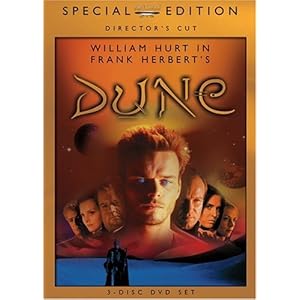
I finished reading Dune Messiah by Frank Herbert yesterday, so that book was freshest in my mind. At the beginning of this year, I decided to embark on reading the current Dune series before the world comes to an end in 2012. Last month I reread Dune. And, coincidentally, last weekend we watched the two SyFy mini-series they did back in the early 2000s for the first three books. We couldn't help but view critically, but it was still the perfect way to spend a weekend, sick with the flu. Reminded me of how critical people were of the 1984 version, which I'm still not ashamed to say I LOVED! We own the extended version on DVD. It'll be interesting to see if Pierre Morel can pull off another major motion picture by 2012, considering fans are thirsty for a movie as epic as the Lord of the Rings trilogy.

Oops. Back to this week's topic...a book review. There are nearly 13,000 reviews of Dune Messiah on Goodreads, so I really didn't think you'd want to yawn through my version. What I will say is reading just the first two books in the series has been inspirational to a Sci Fi series I've been planning for at least five years. Refreshing, because I sometimes read too much popular fiction in the genres of horror and comedy, comparing other books to my own style and story ideas for The Courier. I don't want to say there's a lot of bad stuff out there, but... There's a dent in my son's head, where I throw books I can't get passed the first hundred pages. Now that I've got the Kindle, he's complaining of headaches less.

Speaking of popular fiction, I was pretty excited to find Mark Henry's, Amanda Feral zombie series last month. This guy's writing is funny and gross in just the way I love comedic horror. I read Happy Hour of the Damned and gave it 3 out of 5 stars, only because I didn't care for the ending. It won't stop me from picking up another book in the series though. I like Mark's style as much as I enjoy reading Christopher Moore, who can't write fast enough for us fans. Here's a little bit more about the book.

Seattle. One minute you're drinking a vanilla breve, the next, some creepy old dude is breathing on you, turning you into a zombie. And that's just for starters. Now, the recently deceased Amanda Feral is trying to make her way through Seattle's undead scene with style (mortuary-grade makeup, six-inch stilettos, Balenciaga handbag on sale) while satisfying her craving for human flesh (Don't judge. And no, not like chicken.) and decent vodkatinis.


I'd originally hesitated to pick up a book about zombies, thinking them better left to film. Then I saw a review of this book on Dakota Cassidy's blog. If I was going to take the risk of reading about zombies, Happy Hour of the Damed seemed like the perfect book in which to start. I'm glad I took the plunge because his take on zombies is creative and fun. The characters are undead, but real and likable. I can't wait to see what trouble they get into in the next book.

Promise I'll be prepared next time. I plan to to review Werewolf Smackdown by Mario Acevedo.

*   *   *   *


I apologize for being a week late, but the winners of the free eBooks from Vamplit Publishing are Harley D. Palmer and Susan Midlock. CONGRATS! I'll be in touch with the information you'll need to collect your prize.

Tuesday, March 16, 2010

Greg's review: Composition in Black & White

I know most people are expecting me to tout the latest science fiction novel from Steven Barnes or to hawk some unknown gem from Theodore Sturgeon, but for my review, I decided to stick a little closer to home.

I have just finished reading Composition in Black & White: The Life of Philippa Schuyler (1995), a fascinating biography of a Harlem prodigy whose life ended much too quickly.

Author Kathryn Talalay, recipient of the 1988-89 Rockefeller Foundation Grant and a former 14-year faculty member of Indiana University, gives us a thorough look into the life of a bi-racial prodigy who could read and write before age three, play the piano by age four and compose songs and classical pieces by age five.

The book hits close to home for me in that Philippa was a distant relative of mine. My mother's family has connections with the Schuylers, a fact I never knew until a few years ago.

The book pulls no punches, showing the ups and downs of Philippa's life, as well as those of her parents George and Josephine. For all her accomplishments, Philippa was basically an experiment.

[caption id="attachment_1544" align="alignright" width="216" caption="George Schuyler, 1941"][/caption]

George Schuyler was a pioneering black journalist who risked his life all over the Deep South and colonial Africa to report on the plight of blacks and Africans. He founded the Pittsburgh Courier and risked the wrath of the liberal African-American civil rights movement with his conservative views. An army veteran who rose to the rank of 1st lieutenant, he believed that the only way for blacks and whites in America to live together was to literally come together.

He fell in love with Josephine Cogdell, a prominent white socialite from a prestigious family in Granbury, Texas. They both believed that an interracial child would "invigorate" the races, producing extraordinary children that would breach America's racial divide.

The book gives us a thorough background of George's life, though it does not go quite so in-depth with Josephine. That said, Talalay weaves a complete picture of Philippa's upbringing by showing how close (and, many times, how far) George and Josephine were with their prodigy.

[caption id="attachment_1546" align="alignleft" width="234" caption="Josephine & Philippa (age 15), 1946"][/caption]

We get to see how Josephine raised Philippa on a diet of raw meat and vegetables, how she and George constantly tested their daughter and encouraged her musical abilities and went through the awesome task of financing her training.

In this way, we get to be a fly on the wall as Philippa comes of age, trying to please her parents while surviving critical reviews and articles from black and white newspapers, visits from prominent musicians and honors from politicians like former New York City mayor Fiorello La Guardia.

[caption id="attachment_1542" align="alignright" width="220" caption="Philippa Schuyler, 1959"][/caption]

Sadly, we also begin to feel the ugly sting of racism that she experiences when she comes of age into adulthood. Philippa "disappeared" from the American scene for much of her short adult life, traveling the world on extended tours to get away from an America that looked as her as black only (her white grandparents refused to attend her concerts, even when she was near Granbury; they sent their colored servants instead).

One of the wonders of the book is the extensive detail poured into the recounting of her travels to Africa. Talalay recounts encounters with kings and princes, with an adoring African population and even a visit to Dr. Albert Schweitzer. She also shows us how torn Philippa was between the admiration for her father's homeland and the poverty and despair that plagued the continent.

Probably the most heartbreaking moments are when Philippa begins to feel love and has no idea how to show it or receive it.

If there is a major flaw in this book, it is the sheer amount of detail into Philippa's tragic life. It is impossible to read this book in one sitting, no matter how intrigued one may be. It is a book that needs to be perused a chapter or two at a time.

It's no secret that Philippa's life was cut short. When she tired of music, she became a journalist and author. She reported from hot spots all over the world, but especially from Vietnam. She died in a helicopter crash after rescuing children from a war-imperiled Vietnamese orphanage on May 9, 1967, just 15 days after I was born.

The book even goes to great lengths about her death, recounting the crash, the Army investigation in determining that the pilot was trying to show off for Philippa and endangered the lives of all onboard (I personally had a hard time with this section because it was shown as all the more senseless).

The book does seem unrelentingly bleak at the end, showing George Schuyler as a broken man after the death of Philippa in 1967 and, almost two years to the day, in 1969, when he discovered that a depressed Josephine had hanged herself. George, who always thought Philippa and Josephine would outlive him because of the risks he took as a journalist, died alone in a New York hospital in 1977.

Talalay spares no emotions with her book. Drawing upon hundreds of written accounts, stories from those who knew the Schuylers, and previously unpublished diaries and letters from Philippa, Talalay shows us, in this first authorized biography, a haunted life, but one also full of promise and fascination.

I highly recommend this book as it has something for everyone.

****1/2

(Available on Amazon.com and Kindle)

Monday, March 15, 2010

Book Reviews: C.J.’s choice is Urban Fantasy

Welcome to our new theme!  Big thanks go to Wendy, our computer guru in the group, who worked diligently through illnesses to improve the layout and overall look to better match our style. Kudos!

This week starts off our first in reviewing books. Our goal is to have some book reviewers join the team permanently to either re-post reviews they’ve already done or to post new ones in our weekend spots. If you're interested, please contact us.

I’m reviewing Carole Nelson Douglas, who is by no means a new author but was new to me when I discovered her Urban Fantasy series, Delilah Street: Paranormal Investigator.


I've read all three books in the series, but will focus today on the first one, Dancing with Werewolves (Juno, October 2007, 394 pages).  Here is what Publisher’s Weekly had to say in its starred review:
“While the millennium revelation in this fantastic first of a new paranormal series might not be a shocker for urban fantasy fans—i.e., vampires, werewolves, witches and zombies come out of the closet after Y2K—Douglas (Cat in a Red Hot Rage) handles the premise with such spectacular style, it feels fresh. Delilah Street, who was only 11 in 2000, is now 24 and works for WTCH, a Kansas TV station, as a paranormal investigative reporter. When Delilah angers an undead coworker and is demoted, she moves to Sin City in hopes of finding a possible blood relative seen on CSI Las Vegas V. She gets a job with Hector Nightwine, the show's producer, and falls in love with Ric Montoya, a former FBI agent who finds corpses by dowsing. Douglas spices the action with fabulous characters: Quicksilver, Delilah’s protective dog; CinSims (Cinema Simulacrums), dead celebrities recreated via science and magic; the oldest living vampire in Vegas, once a famous aviator; and Cocaine (aka Snow), a devilish albino rocker. Readers will eagerly await the sequel.”

I thoroughly enjoyed this book. It’s written in a first-person, past-tense style, has a strong heroine with a unique background and supernatural skill set. The world building that Ms. Douglas weaves into the story is seamless and well done. I was transported into her Vegas of the near future and loved her new angle on zombies and their potential uses.

She creates a very likable character in Delilah and I found myself drooling over Ric. The romance is a subplot in this book to the action and adventure, and it never overshadows the plot.  Every element—be it mystery, fantasy, action or romance—blends well and keeps you turning the page.

Dislikes: I felt the cover, and the ones following in books two and three, fell short and did not represent the excellent storytelling.  They looked a little cheesy, and thankfully, the intriguing book jacket was what pulled me in and prompted me to buy.

Book two ramps up the action and starts a story arc that concludes in book three, but I had a hard time getting through the third book. Perhaps it was my own life and the things I’ve had going on, but the direction Ms. Douglas takes the story with the new fantastical elements of an ancient Egyptian culture of vampires living under Vegas since before the pilgrims, left me with too many fantasy angles to juggle and a story that was, at times, hard to follow.

Overall rating on Dancing with Werewolves: 4/5 stars

Overall rating on series: 3.5/5 stars

I would recommend this book to anyone who likes Urban Fantasy, Paranormal Mystery, or Paranormal Suspense. Anyone out there who’s read it? I’d love to hear your take!

Updates: Most all of you following the blog know I've recently obtained representation from agent Kristin Lindstrom.  As of Friday, my full MS for Vampire Vacation has been sent to seven New York publishers.  I'll keep you posted on the results once I hear something.


Please stop by our excellent contest page for details and new book postings—a new winner is picked every week! In addition, the Wicked Blog is up for nomination in the Author Blog Awards, please click on the link in the right sidebar and vote if you have the time - THANKS!

Friday, March 12, 2010

Advice, dialogue and (mis)communicating

I found this interesting blog on LinkedIn, from Anne Maclachlan, who does a bit called "Here's Why."

Anne was kind enough to give me permission to repost the blog she did on author Dr. Deborah Tannen, a New York Times bestselling author and communications expert, for our weekend readers and writers who just can't wait until CJ Ellisson blogs again on Monday.

Anne is not only a blogger, but a published author of horror with "The Thing in the Crosstrees" from the anthology The Bitter End: Tales of Nautical Terror. She is a former news content producer for the San Diego Tribune. She has produced two interactive English as a Second Language (ESL) textbooks and has won awards for her writing from the Society of Professional Journalists and San Diego Press Club, as well as the Southern California Writers Conference.

Since her credentials make me seem like a novice, I have paid attention to her blogs closely, especially this week's on Dr. Tannen. I found Dr. Tannen's article very informative. It has a lot of good advice and our topic this week deals with advice. A few weeks ago, we talked about writing believable dialogue and Dr. Tannen talks about the dialogue (or lack thereof) between men and women.

For aspiring writers, her writing could give valuable tips for writing believable conflict between male and female characters. For our readers, it might help explain some of the dialogue in today's books or, more importantly, in normal life.

Judge for yourselves.

* * * * * * * * * * *


Dr. Deborah Tannen: Solving the communications battle of the sexes.


Deborah Tannen is still my favorite communications expert (so this is more or less a shameless plug of her work) and here’s precisely why: You Just Don’t Understand: Men and Women in Conversation.

[caption id="attachment_1454" align="alignright" width="120" caption="Deborah Tannen"][/caption]

That’s what started it for me, anyway. Dr. Tannen covers everything from male-female communication in the workplace and in social situations to family dynamics and that scary mother-daughter thing. Her advice is concrete and usable. She explains why we tend to communicate the way we do, investigates the social and genetic influences on speech, and lays out how better to listen and understand.

And the thing is, her observations are so accurate and astute that they just might affect your life. If you want to see how and why, here’s an excerpt from some of her writing for a quick look.

Before the next time you want to ask a woman “Why didn’t you just   say that?” or want to yell “You aren’t listening!” at your favorite man, it might be worth your while to investigate these books.

Good luck, all the same.

Excerpt from "You Just Don't Understand: Men and Women in  Conversation" by Dr. Deborah Tannen.

* * * * * * * *


Again, I want to thank Anne Maclachlan for letting Wicked Writers repost her blog. Hopefully, our readers have found something useful from it.


Oh, and don't forget to catch Wicked Writers next week when we talk about the art of reviewing. Our guest blogger will be Harley Palmer, founder of the Writing Academy at Writing.com, who will share how she reviews the dozens of short stories she has received from her students' writing assignments.


How does an unknown author become a Kindle bestseller? Perseverance

Lately, I've been fascinated, and a little obsessed with the changing face of publishing. So when I read this post in Anthony S. Policastro's blog, Writing is About Putting Yourself to Words, I thought it would be a perfect repost for our blog, while we're searching for another male mystery writer to blog with us.

By the way, Anthony is the author of Dark End of the Spectrum.
DARK END OF SPECTRUM will make you think twice before turning on your cell phone or PDA! DARK END OF THE SPECTRUM is a frighteningly plausible, headline ripping tale of the real threats that loom in cyberspace based on the author's years of research into the hacker culture. More..

Thanks, Anthony & Elisa, for letting us repost!


* * * *


I asked novelist Elisa Lorello to share some of her insight in how her first novel, Faking It, peaked to number 6 on the Kindle Bestseller list during the last week of January with her second book, Ordinary World, positioning well around number 40.

By Elisa Lorello
I wish I could give you a formula for my recent success as an Amazon Kindle bestseller. I've been going back, trying to re-trace my steps, and the best I can say is that all the pieces fell into place at the right time. I can, however, give you the pieces. They're the four Ps of marketing: product, price, place, and promotion.

Product

I had written my novel, Faking It, from 2004 to 2006. I spent much of 2007 querying literary agents, and while each query resulted in rejection, some agents requested the manuscript and gave me feedback that prompted me to revise the novel further. In late 2008, I decided to independently publish through Lulu.com. Despite the rejection from agents, I believed in my novel, believed in its quality and appeal, and believed a readership existed, waiting for it. Approximately six months later, in June 2009, I published it on the Amazon Kindle.

But I also have to talk about the Kindle itself as a product. My sales numbers began to skyrocket Christmas week, as I had predicted they would, and kept going up. With the Kindle being Amazon's best-selling product of all time, I knew that excited new Kindle owners (my sister being one of them) were going to want to use them, and they were going to want to buy as many books as they could. Which leads me to the second P…

Price

Pricing, especially for e-books, has been under some scrutiny. Most Kindle users refuse to pay anything over $9.99 for an e-book. And although Amazon lost the recent pricing battle with Macmillan, read the discussion forums to get a sense of what Kindle owners want. Reading those Kindle discussion threads significantly played a role in my decision to price Faking It at 99 cents. (I had originally priced it at $1.99, with Amazon discounting it to $1.19 before they stopped discounting Kindle books.) Many indie (independently published) authors price their books under two bucks in order to entice readers who otherwise wouldn't give an unknown author a chance.

But doesn't that devalue my work and deprive me of royalties? Well, yes and no. Of course I would love to charge at least five dollars for my e-book. My book is worth that, and more. But the question is more about priority. Do you want royalties, or do you want a readership? And can you get one without the other? I wanted a readership. Thus, I lowered my price to 99 cents in September. With each month, sales numbers rose. And, as previously mentioned, by Christmas week my sales really skyrocketed.

Promotion

Because I had independently published Faking It through Lulu.com prior to publishing on Kindle, I had a head start on getting out the word. I made bookstore appearances, gave a local Raleigh, NC television show interview, and jumped on the online social networking bandwagon, taking advantage of Facebook and Twitter. In conjunction to publishing on Kindle, I launched a 30-day blog tour. I also found the aforementioned discussion forums on Kindle (and learned when it was and was not appropriate to give my novel a plug).

Pretty soon, the word of mouth took on a life of its own, and I didn't have to work so hard. By late fall, reader reviews came in, and the majority were four and five stars. (By this time I had also released Ordinary World, the sequel to Faking It; in fact, I launched it on Kindle before paperback!)

I had also become a regular participant on a Facebook discussion forum for Aaron Sorkin fans (the page was created by Sorkin when he started writing The Social Network, but was deleted shortly after filming wrapped). I rarely, if ever, talked about Faking It (except to let Mr. Sorkin know that I had mentioned him in my acknowledgements as one of my favorite writers). But as the other regulars got to know me, they purchased my novel and kindly mentioned it on the forum, offering praise and promotion of their own.

Part of promoting yourself means knowing when not to give your book a plug, but rather just relax and have fun and take pleasure in the interests of others. I've stopped following authors who tweet the same message about their book (and nothing else) day after day, or only use their Facebook page to talk about their good reviews. I have more fun tweeting about things that have nothing to do with my novel, and I find that when I do get around to plugging Faking It or Ordinary World, the results are much more effective. More importantly, I support other authors - especially indie authors - as much as I can, either by hosting them on my blog, re-tweeting their messages, or recommending their book on Facebook or the Kindle forums.

Place

This is probably where timing came in. I was able to ride the wave of social networking, and the readers did the rest. Likewise, as mentioned, with the Kindle being the number one Christmas gift, I now had access to the very readership I sought. Every time I appeared on a blog or posted a message on a discussion board, my exposure increased. Twitter followers re-tweeted my messages, and Faking It appeared on Kindle book review blogs recommended as a good book at a good price. E-book distribution has really opened up thanks to sites like Scribd and Smashwords, not to mention Kindle and Barnes & Noble allowing free e-reader software downloads, and Kindle now being accessible on Black Berry, iPhone, iPod Touch, etc.

For every recommendation and positive review, my books rose in the ranks. From there it became a spiral reaction: The higher the ranking, the more people downloaded the book. The more they downloaded the book, the higher the ranking rose. To my utter shock and delight, Faking It peaked at number 6 on the Kindle Bestseller list during the last week of January with Ordinary World positioning well around number 40. (At the time of this writing, Faking It is number 50, and Ordinary World
is number 176. Both are in the Top 100 in Genre Fiction and the Top 20 in Contemporary Romance.) I had gone from getting 50 downloads in one month back in September 2009, to 50 downloads a day in late December, to 50 downloads an hour (it peaked at 150 an hour at one point!).

There's an X-factor to all of this. No one knows how or when all these things align - believe me, I wish I did. I've tried to pinpoint the exact moment these four Ps converged, and who or what made the difference, but I really don't know why it skyrocketed as quickly as it did at the time it did. I also have no idea how long this success will last.

My numbers have dipped quite a bit in the last two weeks (this could be because people are watching the Olympics rather than reading books, so I'm curious to see if the numbers change in the coming weeks). However, some doors are opened now that weren't previously, and it'll be interesting to see what happens in the coming months. I also plan to start experimenting with pricing, especially as Amazon's author royalty rates are scheduled to increase dramatically in June.

If there's any advice I can give you, it's to start with your product - that is, make your book the best it can be. A readership is waiting to embrace indie authors, but they are holding those authors to high standards. They want to read books that are challenging, entertaining, and, most of all, well-written and well-edited. Pricing your book cheaply doesn't give you permission to publish a cheap book. Above all, work on your craft.

Also, be persistent. My success didn't happen overnight, even though it sometimes feels like it did. I spend a lot of time following up on promotion, reading blogs and discussion forums, responding to readers, etc. It's just as much work as writing the book itself. Some days it doesn't pay off. Other days it pays off in ways I'd never dreamed. Get the word "can't" out of your language. If you believe something can't be done, if you believe you are limited, then your biggest limitation is you.

Faking It and Ordinary World are currently available as an e-book on Amazon Kindle and Smashwords for 99 cents, and at Lulu.com in paperback (Faking It is also available in paperback on BarnesandNoble.com and Amazon.com in paperback). You can follow Elisa Lorello on Twitter @elisalorello, Faking It Fans on Facebook, or "I'll Have What She's Having": The Official Blog of Elisa Lorello.